The Unfinished Obelisk: An Astonishing Window into Ancient Egyptian Engineering 2026

The Unfinished Obelisk in Aswan: Ancient Egyptian Engineering

The Unfinished Obelisk in Aswan is one of the clearest surviving records of ancient Egyptian engineering. Instead of standing at a temple entrance, it remains attached to the rose-granite bedrock of its quarry. Its abandoned form, working trenches, guide marks, and fracture reveal how a colossal monument moved from design to extraction—and why even highly skilled quarry workers sometimes had to stop.

Unfinished Obelisk at a Glance

  • Location: The ancient granite quarries of Aswan, on the east bank of the Nile.
  • Probable date: The reign of Queen Hatshepsut, around 1473–1458 BC.
  • Material: Aswan granite, often described as pink or rose granite.
  • Estimated finished size: About 42 metres long and approximately 1,168 tonnes.
  • Why it was abandoned: Flaws and several fissures appeared in the stone during quarrying.
  • Why it matters: The quarry preserves direct evidence of ancient stone-working methods and is part of the UNESCO World Heritage property “Nubian Monuments from Abu Simbel to Philae.”
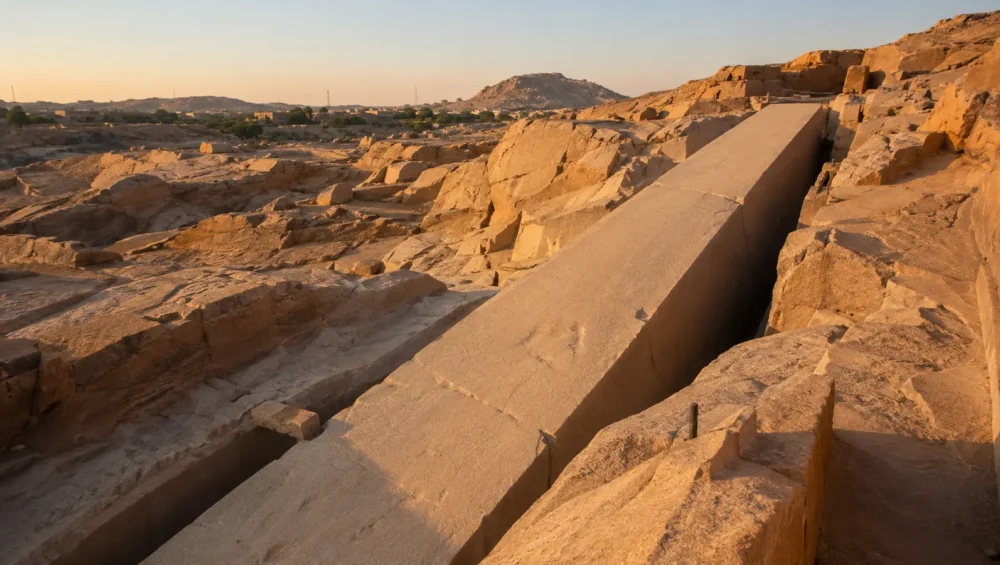
Unfinished Obelisk lying in the ancient granite quarry at Aswan
The Unfinished Obelisk remains joined to the granite bedrock in its Aswan quarry.

Why Is the Unfinished Obelisk Important?

Finished obelisks display the final achievement: a single stone shaft with four tapering sides and a pyramid-shaped top. The Aswan quarry preserves the process instead. Visitors can look down into the channels cut around the monument, follow the outline of its intended form, and see where the granite failed.

UNESCO describes Aswan’s stone quarries and unfinished monuments as fundamental evidence for understanding ancient Egyptian quarrying technology. The site therefore works like an open-air record of labour. It connects the monuments seen at temples with the choices, tools, risks, and physical effort that came before transport and erection.

Was the Obelisk Made for Queen Hatshepsut?

The Egyptian Ministry of Tourism and Antiquities states that the obelisk is believed to have been commissioned by Queen Hatshepsut for the Temple of Amun at Karnak. This is a strong and widely accepted attribution, but it is best expressed with care because the monument was never completed or inscribed with the royal texts that often identify a finished obelisk.

Hatshepsut was one of the most important rulers of Egypt’s Eighteenth Dynasty and commissioned major works at Karnak. The unfinished project fits the scale of her building programme. However, the quarry itself should be read as archaeological evidence rather than used to support speculative stories. The surviving archaeological evidence is more informative than an unsupported connection to a particular monument now standing elsewhere.

What Would the Obelisk Have Looked Like?

Ancient Egyptians called an obelisk a tekhen. It was cut from a single piece of stone, with a rectangular shaft that narrowed toward a pyramidion at the top. Finished examples were normally erected in pairs before temple entrances. The pyramidion could be covered with a reflective metal so that it caught the sunlight.

Obelisks were associated with solar religion and the benben, the primeval mound linked with creation and the first appearance of the sun. Kings used their four faces for names, titles, and religious dedications. If the Aswan example had been finished, the Ministry estimates that it would have measured around 42 metres and weighed about 1,168 tonnes—larger than any other known ancient Egyptian obelisk.
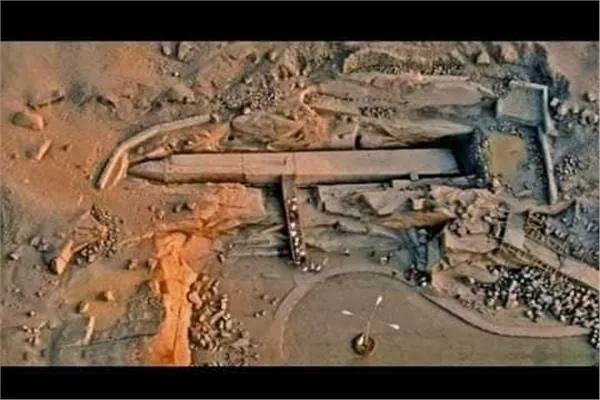
Aerial view of the Unfinished Obelisk and surrounding Aswan quarry
An elevated view makes the obelisk’s scale and its relationship to the surrounding quarry easier to understand.

How Ancient Egyptians Quarried Aswan Granite

Aswan granite was valued for its hardness, appearance, and durability. It was used for obelisks, statues, columns, sarcophagi, and architectural elements throughout Egypt. Quarrying a single stone of this scale required planning long before it could be moved toward the Nile.

Workers first established the outline and proportions on the exposed granite surface. They then opened trenches around the sides, gradually working downward so that the block remained attached beneath. The quarry preserves repeated marks from pounding and dressing the stone. Dolerite pounders—hard, rounded stones found in quarry contexts—were used to strike and break the granite surface. Ochre-coloured guide lines reported at the site also help visitors imagine how teams controlled the intended shape.

The surviving evidence does not provide a complete instruction manual, and researchers continue to study the organisation and sequence of ancient quarry work. What the visitor can see is more valuable than a simplified legend: an unfinished operation with marks left by many stages of labour.

The Crack That Stopped the Project

The obelisk was abandoned after flaws and fissures became apparent in the stone. A fracture in a monument this large was not a minor cosmetic problem. The stone had to withstand quarrying, separation from the bedrock, movement to the river, transport by barge, hauling on land, and the enormous stresses of being raised upright.

Continuing after serious cracking would have risked a catastrophic break after even more labour had been invested. The decision to stop therefore shows careful judgement as well as failure. Ancient engineers worked with natural material whose hidden weaknesses could only become clear as extraction progressed.
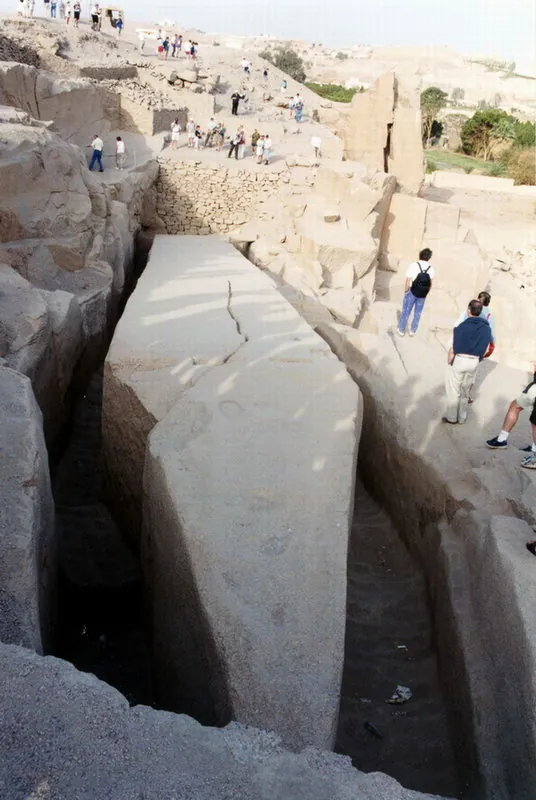
Crack and ancient working marks on the Unfinished Obelisk in Aswan
The long fracture is central to understanding why work on the monument was abandoned.

From the Quarry to the Nile

A completed obelisk would still have faced a difficult journey. After separation and initial dressing, the stone had to be moved from the quarry toward the Nile, loaded onto a specially prepared vessel or barge, transported downstream, and transferred to its destination. It then had to be hauled into position and raised without modern lifting machinery.

The Unfinished Obelisk makes this chain of work easier to appreciate. Its mass explains why granite from Aswan linked quarry workers, surveyors, transport crews, sailors, engineers, and temple administrators. The monument is not simply the product of one ingenious technique; it represents coordinated knowledge across many trades.

What to Look for During Your Visit

  • The overall outline: Step back where the visitor path allows and follow the taper from the broad base toward the upper end.
  • The working trenches: Notice how closely workers had to operate beside the stone as they cut downward.
  • The fracture: Look at its direction and consider the risks it would have created during transport and raising.
  • Tool marks: Changes in surface texture help distinguish worked areas from the natural quarry face.
  • The surrounding quarry: The obelisk is the main attraction, but the wider landscape is part of the archaeological evidence.
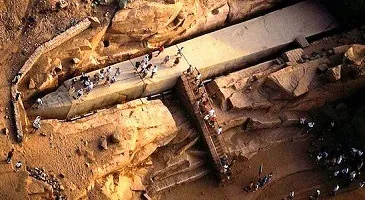
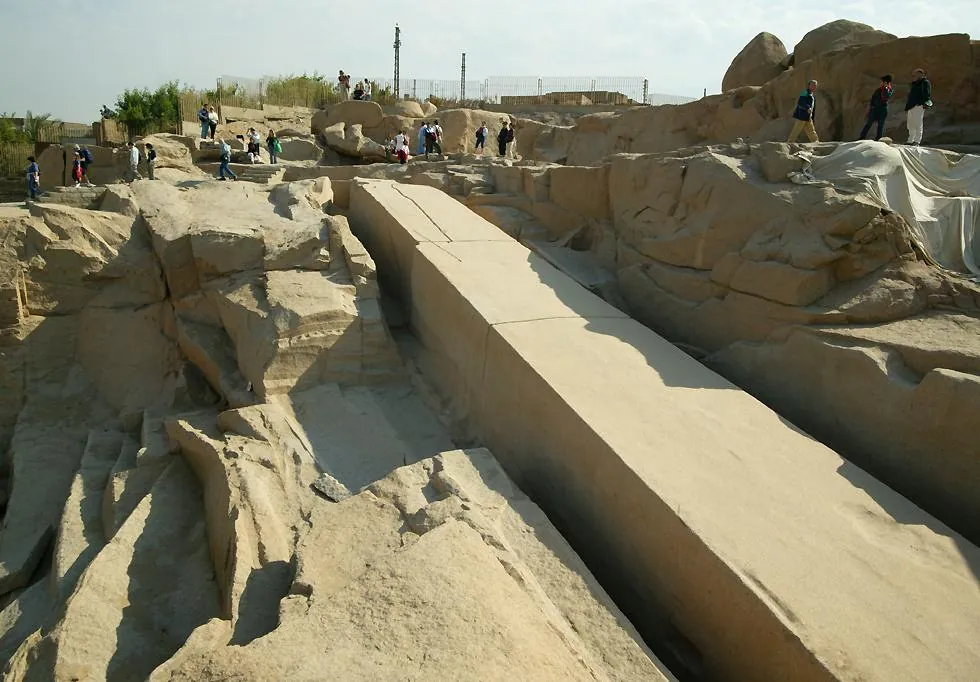
Overview of visitors walking around the Unfinished Obelisk quarry in Aswan
The visitor route provides several perspectives on the obelisk and the ancient quarry landscape.

Reading the Quarry as an Engineering Workplace

Begin by separating three questions: how the monument was shaped, how it would have been freed, and how it could have been transported. They are related operations, but evidence for one does not automatically explain the others. A pounding mark can reveal how a surface was worked; it cannot, by itself, prove the exact arrangement of ropes or boats that would have moved the finished stone. This distinction makes the visit more interesting because it turns an impressive object into a problem that can be explored carefully.

Look first at the narrow channels beside the shaft. Their depth helps convey the limited space available to a worker as the operation progressed. Then compare the comparatively even upper surface with rougher areas nearby. Finally, step back to consider the stone that still joins the monument to its geological setting. Unlike a temple obelisk, this one has never been separated from the landscape that supplied it.

It is tempting to look for a single ingenious secret behind Egyptian construction. The quarry suggests a more substantial achievement: repeated skilled actions, measurement, familiarity with materials, and coordination over time. A team had to keep a large intended shape consistent while responding to the actual stone. The abandoned project is therefore evidence of practical judgement as well as ambition.

What the unfinished surface can and cannot tell us

Not every mark visible today should be assigned to the same operation or date. An ancient quarry could be used repeatedly, and its surfaces have also experienced weathering, excavation, and visitor management. Site labels and specialist explanations are valuable because a casual observer may mistake a natural irregularity for a tool mark or assume that neighboring cuts belong to the same monument.

The surviving shaft has no completed royal inscription giving a full account of its commission. That is why the association with Hatshepsut should remain a probable attribution. Explaining this uncertainty does not diminish the monument. It shows how archaeologists work: the object, its location, related building projects, and the wider history of quarrying are considered together, rather than replaced with an attractive but unproven story.

Granite, Scale, and the Meaning of a Single Stone

Granite gives the visit a distinctive visual character. Look at its grains, variations in color, and changing appearance under direct light and shadow. The material is not a uniform manufactured substance. Its natural structure matters to the story because the builders were trying to obtain one continuous block large enough for a monumental shaft. A problem in one part could affect the usefulness of the whole piece.

The estimated weight and length are helpful, but they become more meaningful when related to a person standing beside the quarry. The visible stone lies horizontally; the planned monument would have risen vertically above a temple approach. Imagine its broad lower end as a base and follow the taper toward the top. This simple change of perspective explains why a visit to an unfinished object can be as memorable as seeing a completed monument.

Do not assume that the published dimensions describe a finished object that once stood here. They express what the abandoned project would have become. Its present condition is the evidence: partly shaped, cracked, and still attached. Captions, guide explanations, and photographs are clearest when they distinguish the intended monument from the surviving work in progress.

Quarry, Temple, and Museum: Three Different Views of Ancient Work

A quarry visit and a temple visit answer different questions. At the quarry, attention falls on extraction, material, and physical constraints. At a temple, the finished stone participates in an architectural and religious setting. In a museum, labels and objects can help explain the historical context. None is a substitute for the others, and combining them gives a more complete understanding than treating the quarry as a brief stop between famous buildings.

For a traveler based in Aswan, the Unfinished Obelisk is especially useful early in an itinerary. Afterwards, large stone doorways, statues, and columns become easier to appreciate as products of quarrying and transport. The comparison should remain careful: not every stone at every temple is granite, and different materials required different working methods. The lesson is to ask what each monument is made from and what that choice allowed its builders to do.

A Comfortable Visit for Different Travelers

Families and curious first-time visitors

With children, concentrate on a few visible ideas rather than a long list of dates. Can they find the outline of the intended shaft? Where is the crack? Which side would have pointed upwards? These questions make the site understandable without pretending that every detail of ancient engineering has been solved. Keep the group on the visitor route and avoid using the monument itself as a climbing or demonstration surface.

Photography and slower observation

Start with a wide photograph showing the obelisk in its quarry, then take a closer image of a visible working surface from the permitted path. A final image with the surrounding landscape records the setting. Do not step into restricted areas to reproduce a dramatic aerial photograph: the useful ground-level view is the one you can reach safely and legally. A few accurately captioned pictures are more informative than many nearly identical shots.

Heat, walking, and realistic timing

Build the visit around the least mobile member of your group. A short distance on a map may still involve steps, changes of level, and reflective stone under strong sun. Ask about the current route before buying a combined excursion if accessibility is important. Your driver’s arrival time should leave room for admission and a comfortable walk, not just a hurried photograph before closing.

The quarry is best understood when there is time to pause. Even a visitor who is not especially interested in engineering can leave with a clearer sense of the decisions behind Egypt’s monuments: choosing the material, recognizing its limits, and knowing when continued work was no longer worthwhile.

Planning a Visit to the Unfinished Obelisk

The archaeological site is close to central Aswan and is normally visited by road. It is an exposed granite quarry, so the heat and glare can be strong even when the visit is not long. Early morning is generally the most comfortable time and often provides softer light for photography.

  • Suggested duration: Allow around 45–60 minutes for a comfortable circuit with explanation and photographs.
  • Footwear: Wear shoes with a secure grip. Paths, steps, and stone surfaces may be uneven.
  • Sun protection: Carry water, a hat, and sunscreen, especially outside the cooler winter months.
  • Accessibility: The sloping quarry landscape and steps can be difficult for visitors with limited mobility. Confirm current access arrangements before travelling.
  • Photography: Follow signs and staff instructions. Do not leave the marked route or climb on archaeological surfaces.

How to Combine the Unfinished Obelisk with Aswan Highlights

The site fits naturally into a half-day route with Philae Temple and the Aswan High Dam. Together, the three stops connect ancient stone working, temple history, the UNESCO rescue campaign, and modern engineering. Visitors with more time can continue to Elephantine Island or explore the wider selection in our guide to things to do in Aswan.

A guide can make the quarry easier to read because much of its importance lies in subtle marks and the sequence of work rather than decoration. If you are arriving by air, plan enough time between your Aswan airport transfer and the site’s closing time.

Authoritative Sources

How to Obtain Tickets and Check Opening Hours

The Egyptian Ministry of Tourism and Antiquities listing, checked on 30 August 2026, gives daily opening hours of 7:00 am to 4:00 pm. Listed admission is EGP 220 for foreign adults and EGP 110 for foreign students, with separate Egyptian visitor categories. These are site admission prices, not the cost of a private car or guide.

Before travelling, consult the official Unfinished Obelisk visitor page for the latest categories and any available official booking link. If arranging an excursion, ask whether admission is included in the written quotation or paid separately at the site. Students should confirm eligibility and accepted identification before relying on a discounted ticket.

Opening hours and fees can change. Confirm last admission, current payment arrangements, and any temporary restrictions close to your visit. Arriving well before the listed closing time allows a proper circuit rather than a rushed stop. Keep your ticket available for inspection, and follow the marked visitor route after entering.

Frequently Asked Questions

Why is it called the Unfinished Obelisk?

It was abandoned while still attached to the quarry bedrock. The intended outline had been formed, but the stone was never fully separated, transported, inscribed, or erected.

Who commissioned the Unfinished Obelisk?

It is widely believed to have been commissioned during the reign of Queen Hatshepsut for the Temple of Amun at Karnak. Because the monument was never finished or inscribed, responsible descriptions present this as a probable attribution rather than absolute certainty.

How big is the Unfinished Obelisk?

According to Egypt’s Ministry of Tourism and Antiquities, it would have stood around 42 metres high and weighed approximately 1,168 tonnes if completed.

Why did the ancient workers abandon it?

Flaws and several fissures appeared in the granite. Those weaknesses could have caused the stone to break during extraction, transport, or erection.

Can visitors see ancient tool marks?

Yes. Worked surfaces, pounding marks, trenches, and reported guide lines make the quarry especially valuable for understanding the process of shaping granite.

Is the Unfinished Obelisk part of a UNESCO World Heritage Site?

Yes. The stone quarries and obelisk form one component of the UNESCO World Heritage property “Nubian Monuments from Abu Simbel to Philae.”

How long should I spend at the site?

Most visitors need about 45–60 minutes. Allow more time if you want a detailed archaeological explanation or need to move slowly on the uneven route.

What is the best time to visit?

Early morning is usually best for cooler temperatures and gentler light. Always check the current official schedule before travelling.

Contact us

to discover the treasures of ancient Egyptian kingdoms through time.
Atum Trip

Atum Trip

Read more in the Atum Trip blogs:

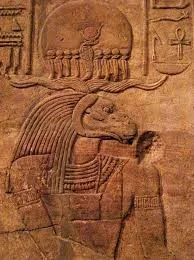
Khnum, the ram-headed Egyptian creator god, carved in stone relief

Esna Temple: Khnum, the Creator God, and Elephantine

Esna Temple: Khnum, the Creator God, and Elephantine

Khnum, the ram-headed Egyptian creator god, carved in stone relief
Khnum, the creator god worshipped at Esna and Elephantine.

Khnum was the ram-headed Egyptian creator god who fashioned life on a potter’s wheel and was closely associated with the Nile’s life-giving water. Understanding him makes Esna Temple far more than a beautiful columned hall: its carvings become a record of creation, kingship, and the renewal of the world.

This guide begins with Khnum himself, then explores his standing temple at Esna, before turning to the older sacred landscape of Elephantine Island in Aswan. These are two different places, not alternative names for one monument. Together they show how one god could inspire distinct local traditions along the Nile.

Who Was the God Khnum?

Khnum was one of ancient Egypt’s oldest deities. Egyptian artists usually represented him as a man with the head of a ram, although the form of the horns could change over time. In religious images he appears beside a potter’s wheel, shaping a human body or its spiritual double from clay. The image made him an intimate creator: life was not simply commanded into existence but carefully formed.

The ram itself carried ideas of vigor, fertility, and divine power. Khnum’s ram-headed form should not be confused automatically with every Egyptian ram deity. Amun could also take a ram form, as could Banebdjedet and other local gods. Their identities sometimes overlapped in later theology, but each possessed distinct cult centres, traditions, and divine relationships.

Khnum as a creator at the potter’s wheel

Temple reliefs show Khnum creating kings, gods, or ordinary human beings on his wheel. In some scenes he forms both the body and the ka, the vital spiritual force that accompanies a person. The potter’s clay was an especially powerful metaphor in Egypt because fertile mud arrived with the Nile flood. Water, silt, growth, and human birth could therefore be understood as parts of one continuous process.

Khnum was not the only creator god. Ancient Egyptian religion allowed several creation traditions to coexist. The Heliopolitan tradition centered on Atum and the beginning of creation, while Memphis emphasized Ptah’s creative thought and speech. Khnum’s theology focused on skilled formation. Rather than replacing these traditions, Egyptian priests connected and reinterpreted them.

Khnum and the Nile flood

At Elephantine, Khnum was closely associated with the Nile’s inundation. The First Cataract, granite islands, channels, and turbulent water made the region feel like a natural threshold. Ancient Egyptians regarded the southern frontier as one of the places from which the life-giving flood entered Egypt. Khnum could be imagined as guarding or releasing the water and ensuring its abundance.

This ancient explanation was religious rather than geographical in the modern scientific sense. The Nile’s great sources lie much farther south, but Elephantine was the point where the river entered the traditional Egyptian heartland from Nubia. Its landscape therefore gave the flood a visible sacred doorway.

Esna Temple: The Standing Temple of Khnum

Esna lies south of Luxor and north of Aswan. Its Temple of Khnum is located within the modern town, at a level lower than the surrounding streets because centuries of settlement accumulated around it. What survives most impressively is the great pronaos, or columned vestibule. Its massive façade and twenty-four richly decorated columns create an architectural experience very different from the open ruins of Elephantine.

When was the Temple of Esna built?

Esna possessed an older sacred history, and temples stood in the area before the surviving monument. The present structure developed during the Ptolemaic and Roman periods. Work on the inner temple is associated with Ptolemaic rulers, while the monumental pronaos was built and decorated mainly under Roman emperors from the first to third centuries AD.

Inscriptions and reliefs name emperors including Claudius, Vespasian, Titus, Domitian, Trajan, Hadrian, and later Roman rulers. They appear in traditional pharaonic form, presenting offerings to Egyptian gods. This does not mean they personally carved the walls or regularly visited Esna. The images expressed the continuing ritual idea that the legitimate ruler maintained harmony by serving the gods.

The surviving hall is therefore not an Old Kingdom building and should not be described as contemporary with Egypt’s pyramids. It belongs mainly to the Graeco-Roman age, when Egyptian priests continued to compose complex hieroglyphic texts and preserve local religious knowledge under foreign imperial rule.

The twenty-four columns

The pronaos contains twenty-four columns. Their capitals display varied plant forms rather than one repeated design. Palm, papyrus, and other vegetal patterns turn stone into an idealized garden. The decoration reflects abundance and the regenerative power of the created world.

Because the hall long stood below the level of the town and accumulated soot and dirt, many colors were hidden. Modern Egyptian-German conservation work has cleaned parts of the ceiling, columns, and walls, revealing vivid pigments and details that were difficult to recognize before. These restored surfaces allow visitors to appreciate the Roman-period temple as a painted environment, not simply a collection of brown stone carvings.

Astronomy, festivals, and sacred texts

Esna’s ceiling includes astronomical imagery, constellations, decans, planets, and representations of the sky. The walls and columns preserve ritual calendars, hymns, festival texts, geographical lists, and theological compositions. Some inscriptions are written with unusual hieroglyphic spellings and learned wordplay, demonstrating the expertise of the temple’s priestly scholars.

Festival scenes show divine boats, offerings, processions, and the king’s ritual service. The temple’s sacred barque imagery provides an important setting for understanding Khnum’s festivals. Such images help reconstruct how the building functioned: statues of the gods were kept in sacred spaces and carried in processions on ceremonial barques during festivals.

Khnum’s theology at Esna

At Esna, Khnum could be celebrated as a creator of gods, people, animals, and the ordered world. Priests developed multiple forms of the deity, and texts describe his cosmic roles with remarkable richness. His ram form remained central, but the theology was not limited to the Nile flood. He could embody primeval creative power, solar life, breath, fertility, and the organization of existence.

Neith also occupied an important place in Esna’s creation traditions. Some texts present her as a primeval creator and mother, showing again that Egyptian temples did not insist on a single exclusive creation narrative. Khnum and Neith could both receive universal roles within the same intellectual landscape.

Khnum, Heka, and Neith at Esna

Esna developed its own complex theology. Khnum remained the principal local god, but he was worshipped with goddesses including Menhit, Nebtu, and Neith, and with Heka, the personification of magical power. The surviving inscriptions present sophisticated creation accounts in which Khnum’s creative activity could be linked with Neith, an ancient mother and creator goddess.

Heka was more than magic in the modern sense. He represented the divine force that made creation and ritual effective. At Esna, relationships among Khnum, Neith, Menhit, Nebtu, and Heka reveal how temple theologians built a local vision of the cosmos while remaining connected with wider Egyptian traditions.

Khnum Temple on Elephantine Island

Ram-headed Khnum depicted in an ancient Egyptian relief
Khnum’s ram-headed appearance connects the creator god with his temple traditions.

The remains of Khnum’s temple occupy part of the archaeological zone on the southern end of Elephantine Island. Today the visitor encounters foundations, reconstructed architectural elements, blocks, gateways, and evidence from many building phases. It does not resemble the complete monumental hall at Esna. Its importance lies in its deep history and in the way archaeology reveals a sanctuary that changed with the island itself.

Why Elephantine was sacred

Elephantine stood at Egypt’s ancient southern border and controlled movement through the First Cataract. Trade routes brought ivory, incense, animal products, minerals, and other goods from Nubia and farther south. Military expeditions and diplomatic contacts passed through the region. The island was therefore simultaneously a settlement, fortress, trading centre, administrative station, and sacred landscape.

Khnum’s role matched this setting. As master of the cataract and the inundation, he protected the water on which Egypt depended. His temple stood close to the sanctuaries of Satet and other religious buildings, forming a complex ritual environment rather than an isolated monument.

When was the Elephantine Temple of Khnum built?

There is no single construction date for the Elephantine temple. Religious activity on the island reaches back to Egypt’s earliest periods, and the sanctuary of Satet preserves especially early phases. Evidence connected with Khnum developed across the Pharaonic era. Middle Kingdom and New Kingdom rulers contributed to the sacred complex, while major rebuilding and enlargement continued under the Late Period and the Ptolemaic rulers.

The temple whose later remains are best documented was therefore the product of successive kings rather than one founder. Pharaohs added gateways, courts, reliefs, shrines, and inscriptions because building for a god proclaimed royal legitimacy. The Ptolemies, Macedonian rulers who governed Egypt after Alexander the Great, continued to present themselves through Egyptian ritual forms and supported Khnum’s cult.

Much of the complex was dismantled in later centuries, and blocks were reused. Archaeologists have recovered and studied fragments that allow portions of the temple’s history to be reconstructed. When visitors see scattered stone and partial architecture, they are looking at the survival of a long sequence—not evidence that the site was originally small or unimportant.

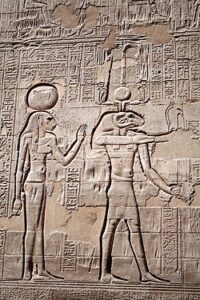
Detail of an ancient Egyptian relief depicting Khnum
Relief detail illustrating Khnum’s recognizable ram-headed form.

Walking through the archaeological site

Approaching the southern island by boat, the visitor first senses the relationship between water and stone. Inside the archaeological zone, the ground is uneven and the monuments require imagination. The Nilometer descends toward the river; the remains of Satet’s sanctuary reveal repeated rebuilding; museum objects and inscribed blocks explain the island’s long occupation.

Khnum’s precinct becomes most meaningful when viewed as part of this whole landscape. Pause beside the reliefs, look toward the cataract, and consider why water control, frontier protection, and creation became inseparable here. Elephantine rewards slow observation more than a hurried checklist.

Satet, Anuket, and the Elephantine triad

On Elephantine, Khnum belonged to a divine family usually called the Elephantine triad. He was joined by Satet and Anuket. Satet was an ancient goddess of the southern frontier, Elephantine, and the inundation. Her cult on the island is extremely old, and her sanctuary was repeatedly rebuilt around a natural granite feature. Anuket, often connected with the cataract region and the flowing river, completed the group.

The family relationships assigned to these deities could vary between texts and periods; a single family tree cannot describe every Egyptian religious tradition. Together they expressed a sacred geography: the guardian deities of the frontier, cataract, river, and annual renewal.

Planning Your Esna Temple and Elephantine Visits

Start with Esna’s hall, then look closely

Allow roughly an hour for an unhurried look inside Esna Temple, and longer if you enjoy inscriptions or plan to explore the town. This is a suggested visiting allowance, not a timed admission rule. Begin near the entrance to understand the hall’s scale, then look up at the capitals and ceiling before examining individual offering scenes. Give your eyes time to adjust between the bright street and the shaded interior.

Bring water and comfortable shoes. The temple sits below street level, so ask about the current entrance arrangement and steps if anyone in your group has limited mobility. Do not assume that every historic site has a step-free route. Restoration work may affect specific viewing positions; follow barriers and staff directions rather than trying to reach a better camera angle.

Give Elephantine its own time in Aswan

Reach Elephantine by ferry or an arranged boat crossing from Aswan. Confirm the landing point, return arrangements, and whether the fare is one-way before departure. The boat journey and archaeological admission are separate planning items. Allow around ninety minutes to two hours for the archaeological zone; museum access and the pace of your group can change that estimate.

The island also has living communities. Stay on established paths, ask before photographing residents, and avoid treating homes as part of the archaeological attraction. For a broader introduction, read our Elephantine Island travel guide and things to do in Aswan.

Combine destinations without rushing

Esna can fit a journey between Luxor and Aswan, while Elephantine works naturally on a separate Aswan day. A transfer is not automatically a sightseeing tour: agree on any stop, waiting time, guide, and entry fees before booking. If you also want Edfu Temple or Kom Ombo Temple, leave enough daylight for meaningful visits rather than collecting brief photo stops.

At both sites, look without touching carved or painted surfaces. Follow current photography notices and staff instructions. A phone photograph can record an overall scene, but a guide’s explanation of the figures, offerings, and inscriptions often gives that photograph its lasting meaning.

Historical Sources and Further Reading

The University of Tübingen’s Esna research project documents the temple and its conservation with the Egyptian Ministry of Tourism and Antiquities. Its 2024 restoration report explains how cleaning revealed painted details. For Elephantine, the German Archaeological Institute’s account of research on the island places the temples within a long settlement history. The Global Egyptian Museum’s Khnum entry introduces his creator and inundation roles.

Tickets, Opening Hours, and How to Book

Checked 30 August 2026: consult the linked official listings again near your visit. Admission categories, hours, and access arrangements may change; last entry is not necessarily the same as closing time.

Esna Temple tickets and opening hours

The official Esna Temple ticket page lists foreign adult admission at EGP 200 and foreign student admission at EGP 100. Egyptian adult and student rates are EGP 20 and EGP 10 respectively.

  • Saturday, Monday, Wednesday, and Thursday: opens at 7:00 am; the listing specifies last entry at 4:00 pm, without separately stating closing time.
  • Sunday, Tuesday, and Friday: listed hours are 7:00 am–6:00 pm.

Use the official page’s “Book Now” option to select the available visit date and ticket category, or ask the site ticket office about on-site admission. Check eligibility before selecting a student ticket and bring supporting identification. Keep your booking confirmation accessible. Mobile-phone photography is listed as free; ask separately about other equipment.

Elephantine tickets and opening hours

The Ministry’s Elephantine listing shows daily hours of 8:00 am–4:00 pm, foreign tickets of EGP 200 for adults and EGP 100 for students, and Egyptian tickets of EGP 20 for adults and EGP 10 for students. Confirm the ticket office and which museum areas are accessible when arranging your crossing. Boat fares are not included in the figures quoted here.

Frequently Asked Questions About Esna Temple and Khnum

Who was Khnum?

Khnum was an ancient Egyptian ram-headed creator god associated with forming life on a potter’s wheel. At Elephantine he was also closely connected with the First Cataract, the Nile inundation, and the southern frontier.

Was Khnum worshipped only on Elephantine Island?

No. Elephantine was one of his most important cult centres, but Khnum was worshipped elsewhere, especially at Esna. His theology and divine companions varied according to the local temple tradition.

Who were Khnum’s wife and daughter?

Khnum, Satet, and Anuket formed the Elephantine triad, although their family relationships were not described identically in every tradition. At Esna, Khnum was associated with deities including Menhit, Nebtu, Neith, and Heka.

When was Khnum Temple on Elephantine built?

It was not built in one campaign. The sanctuary developed through multiple Pharaonic periods, with contributions and rebuilding under Middle Kingdom, New Kingdom, Late Period, and Ptolemaic rulers. Its surviving remains represent many historical layers.

When was Esna Temple built?

Esna had earlier sacred buildings, but the surviving temple structure is mainly Ptolemaic and Roman. Its great pronaos was built and decorated principally during the Roman Period, from roughly the first through third centuries AD.

Are Elephantine’s Khnum Temple and Esna Temple the same place?

No. Elephantine’s temple remains are in Aswan, while Esna Temple is in the town of Esna south of Luxor. Both honour Khnum, but their dates, architecture, associated gods, and visitor experiences differ.

Can I use one ticket for Esna and Elephantine?

No. They are separate sites in different towns. Plan separate admission arrangements, and budget independently for transport and any guide. Check the official listings above before travel.

How long should I spend at Elephantine?

Allow about ninety minutes to two hours for the archaeological zone, temple remains, Satet sanctuary, Nilometer, museum, and river setting. Add more time if you also want to explore the island’s living Nubian communities respectfully.

Is Esna Temple worth visiting?

Yes, especially for travelers interested in Graeco-Roman religion, painted temple decoration, astronomy, and hieroglyphic texts. The twenty-four-column pronaos is very different from the ruined archaeological landscape at Elephantine.

Contact us

to discover the treasures of ancient Egyptian kingdoms through time.

Atum Trip

Atum Trip

Read more in the Atum Trip blogs:

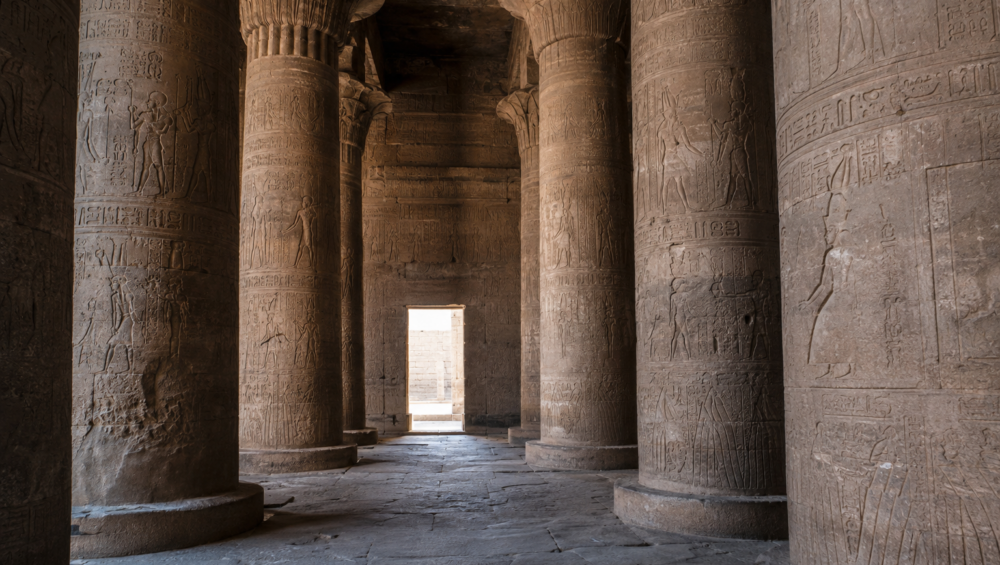
Massive columns inside the hypostyle hall of Edfu Temple

Edfu Temple: An Unforgettable Walk Through the House of Horus 2026

The streets of modern Edfu seem to close around you until, almost without warning, two immense stone towers rise above the town. Their surfaces catch the Upper Egyptian sun, and the figures carved across them appear larger with every step. This is your first view of Edfu Temple, the great sanctuary of Horus and one of the most complete ancient Egyptian temples still standing. Approaching it is different from seeing an isolated ruin in the desert. The temple remains surrounded by a living city, just as sacred buildings in ancient Egypt were connected to busy communities, fields, workshops, river traffic, and festival routes. Yet the moment you pass between its pylons, the noise begins to fall away. Open sunlight gives way to columns and shadow. Doorways become smaller, rooms grow darker, and the building guides you toward the sanctuary at its heart. This carefully controlled journey was part of the temple’s meaning. Edfu was not designed merely to impress. Its architecture moved worshippers and priests from the public world toward increasingly sacred space. Its walls recorded rituals, festivals, offerings, creation traditions, and the mythic victory of Horus over Seth. Walking through it today allows you to understand not only how an Egyptian temple looked, but how it worked.

What Is Edfu Temple and Why Is It Important?

Edfu Temple, also called the Temple of Horus at Edfu, stands on the west bank of the Nile between Aswan and Luxor. The surviving monument was built mainly during the Ptolemaic period, when Egypt was ruled by a dynasty of Macedonian Greek origin that adopted the public language and religious traditions of Egyptian kingship. Its importance comes from more than its impressive preservation. Many Egyptian temples survive only in fragments: a gateway, scattered columns, foundations, or isolated reliefs. At Edfu, visitors can still follow a remarkably complete sequence from the monumental entrance through the courtyard and columned halls to the sanctuary and surrounding ritual chambers. The inscriptions are equally valuable. They preserve extensive information about ceremonies, the temple calendar, priestly duties, sacred geography, and the rituals through which the Egyptians maintained order in the divine and human worlds. These texts must still be interpreted with care—they describe an ideal sacred system rather than an ordinary day witnessed by a modern observer—but they provide exceptional evidence for late Egyptian religion.

Who Built Edfu Temple?

The first stone of the Ptolemaic temple was laid in 237 BC under Ptolemy III Euergetes. Construction and decoration continued under successive rulers for generations. The inner portion was formally consecrated in 142 BC, while work on the pronaos, pylon, enclosure, and decoration continued afterward. The completed temple was consecrated in the first century BC, more than 170 years after construction began. That long timeline matters. Edfu Temple was not the creation of one king or one architectural campaign. It was a multigenerational project in which rulers repeatedly presented themselves in the traditional role of pharaoh: offering to the gods, defeating disorder, and protecting Egypt. Although the Ptolemies came from outside Egypt, the imagery on these walls places them within a much older Egyptian ideology of sacred kingship. The Ptolemaic building also did not appear on an empty site. Edfu had been an important settlement and cult center long before 237 BC. Inside the sanctuary stands a granite naos bearing the name of Nectanebo II, a ruler of Egypt’s Thirtieth Dynasty. It predates the visible Ptolemaic structure and connects the later temple with an earlier sacred building.

Horus of Edfu: The Falcon God at the Center of the Temple

Falcon representation of Horus associated with Edfu Temple
Horus, the falcon god, was the divine protector at the heart of Edfu Temple.
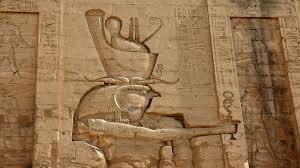
As you enter the courtyard, a dark granite falcon watches from near the gateway. Its form is compact and powerful: folded wings, an upright body, and the calm gaze of a divine protector. It represents Horus of Edfu, often known as Horus Behdety. Horus had several forms and traditions across Egypt, so it is best not to reduce him to a single simple identity. At Edfu he was a sky and solar deity, a defender of divine order, and a model of legitimate kingship. He was also understood within the story in which Horus, son of Isis and Osiris, contends with Seth and triumphs over forces threatening rightful rule. Scenes of that conflict appear along the temple’s inner enclosure wall. Horus attacks Seth, who is represented in different forms, including a hippopotamus. These carvings are not a modern illustrated storybook. They belong to ritual performances and sacred texts through which the defeat of chaos was repeatedly renewed. Horus was also linked to Hathor of Dendera. During the Festival of the Beautiful Reunion, Hathor’s divine image traveled from Dendera to meet Horus at Edfu. The festival united two cult centers and transformed theology into movement: boats on the Nile, processions, offerings, music, and communal celebration.

Walking Through Edfu Temple Step by Step

The Mammisi and the Approach

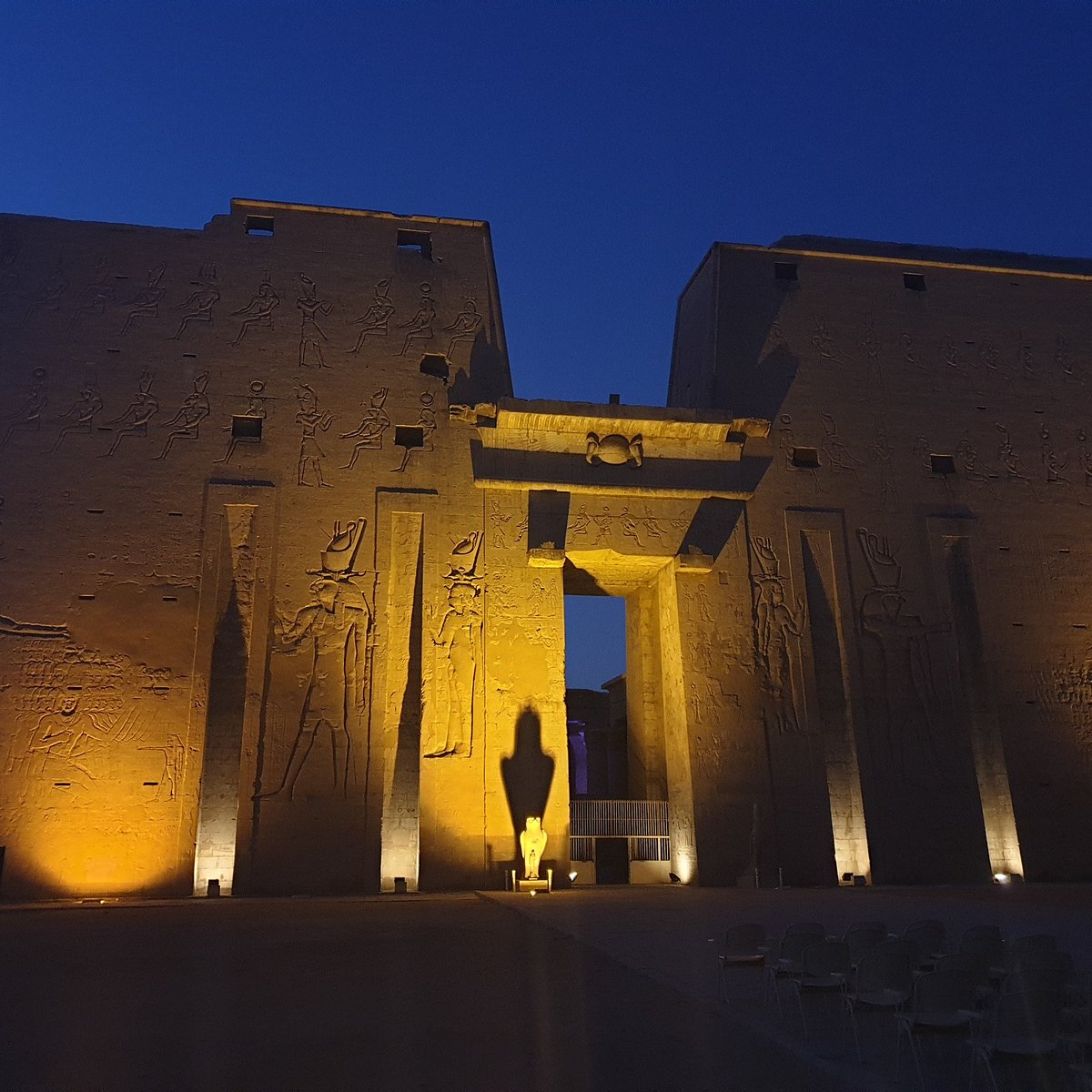
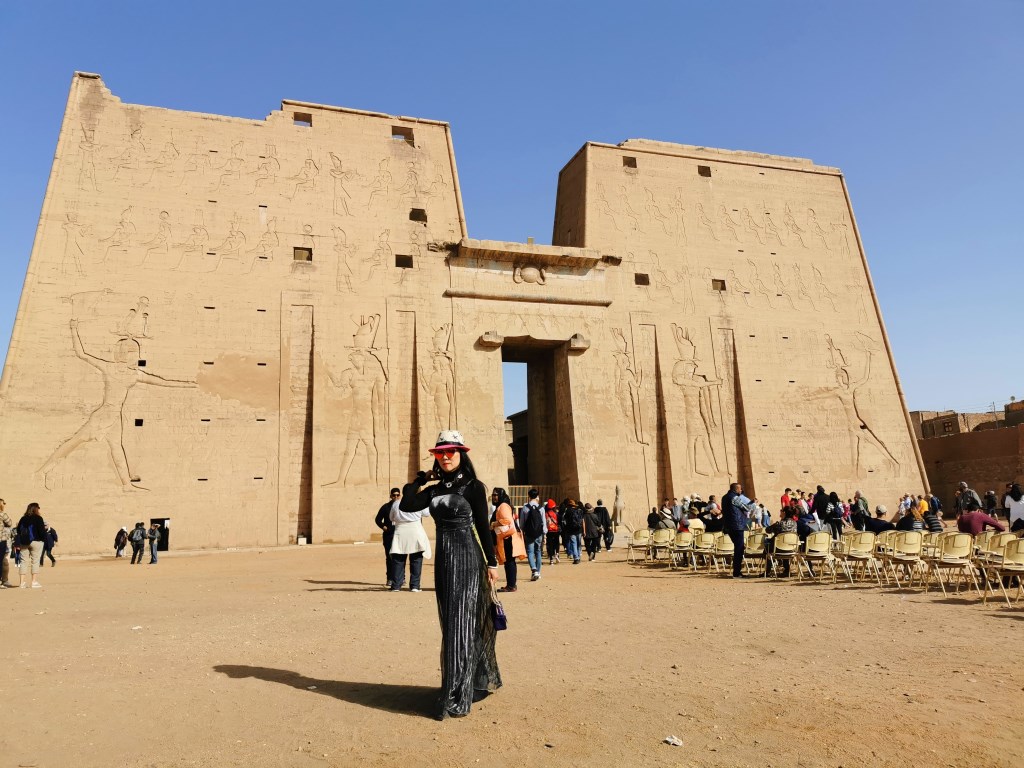
Before reaching the principal gateway, you encounter the remains of a mammisi, or birth house. Such buildings were associated with divine birth and the renewal of royal legitimacy. Its position outside the central temple reminds you that the sanctuary once belonged to a larger sacred complex rather than standing alone as it appears in many photographs. Then your attention is pulled upward to the pylon. Roughly symmetrical towers frame the central entrance, their broad surfaces covered with reliefs of the king before the gods. The scale deliberately reduces the human visitor. You stand below a world in which rulers and deities are monumental, while the gateway offers the only path forward.

The Great Pylon

Monumental pylon at the entrance of Edfu Temple
The monumental pylon forms the imposing public entrance to Edfu Temple.
The pylon is the public face of Edfu Temple. Among its dominant scenes is the familiar Egyptian image of the king raising a weapon over defeated enemies before Horus and Hathor. The representation should not automatically be read as a record of one literal battle. It is also a symbolic statement: the pharaoh restrains disorder and preserves maat, the proper balance of the world. Look for the vertical grooves that once held flagstaffs. Banners would have added color and movement to the stone façade. Imagine them lifting in the wind as a procession approached—not as a claim that we know the exact appearance of every festival day, but as a reminder that ancient temples included textiles, incense, music, polished metal, painted surfaces, and human activity now largely missing.

The Open Courtyard

Sunlit courtyard and columns inside Edfu Temple
The open courtyard creates a transition from bright sunlight to the darker inner halls.
Through the gateway, sunlight spreads across a wide courtyard surrounded on three sides by columns. This was a transitional space. It remained more accessible than the inner rooms, yet its surrounding reliefs placed every visitor within a sacred program of offerings and divine presence. Walk slowly beneath the colonnades. Each capital differs in its plant-inspired design, evoking the fertile world created from the primeval waters. The courtyard also gives you one of the best opportunities to appreciate the temple’s changing rhythm: dazzling open sky behind you, deepening shade ahead. Two granite falcon statues are associated with this entrance area, although they are not identical in condition. They have become recognizable symbols of Edfu, but they were never simply decoration. They made the god’s presence visible and guarded the passage into his house.

The First Hypostyle Hall

Massive columns inside the hypostyle hall of Edfu Temple
Columns and carved reliefs lead visitors deeper into Edfu Temple.
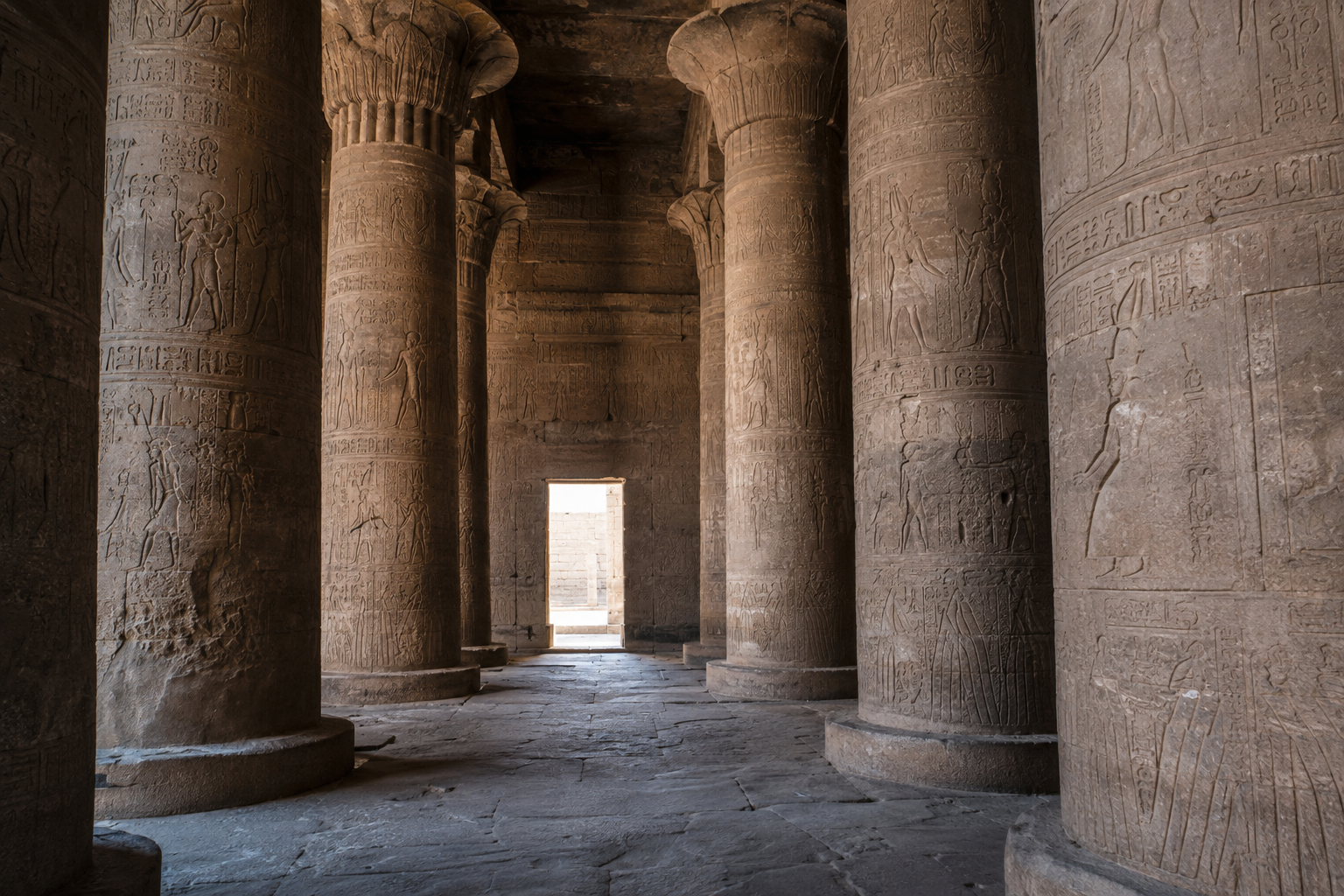
Cross the threshold and the atmosphere changes immediately. The first hypostyle hall rises around you, supported by massive columns. Light enters more selectively, sharpening carved figures while leaving corners in shadow. The ceiling feels lower than the open sky of the court, even though the hall itself is monumental. Small chambers connected with temple functions open from this area. One was associated with consecration, another with a library. The latter does not mean a modern reading room lined with surviving books. Wall inscriptions record categories of sacred texts, offering a rare glimpse into the knowledge temple specialists considered essential.

The Inner Halls and Offering Rooms

As you continue, the architectural axis becomes more intimate. A second hypostyle hall and a sequence of vestibules lead toward the sanctuary. Rooms were associated with offerings, preparation, ritual purity, and the storage of objects required for cult practice. Here it becomes easier to understand that an Egyptian temple was not primarily a congregational building. Daily service centered on the divine image and was carried out by authorized priests. Food, drink, linen, incense, oils, and symbolic objects moved through a carefully ordered system. The building functioned as the god’s earthly residence and as an institution supported by land, labor, and administration.

The Sanctuary and Granite Naos

Granite naos inside the sanctuary of Edfu Temple
The dark granite naos stands at the sacred heart of Edfu Temple.
At last you reach the most sacred zone. The sanctuary is darker and quieter, enclosed by chapels and corridors. At its center stands the granite naos of Nectanebo II. The divine cult image would once have been protected within such a shrine, although the original statue is no longer present. A modern sacred-bark reconstruction helps visitors imagine how a portable shrine could have carried the god during processions. It is useful as interpretation, but it should not be confused with an intact Ptolemaic ritual object. The distinction is small but important: responsible history separates what survives from what has been reconstructed to explain it. Around the sanctuary are chapels associated with particular gods and ritual purposes. Their density creates the feeling of being inside a sacred machine, with every surface, doorway, and room contributing to ceremonies larger than any single visitor could see.

The Horus and Seth Reliefs

One of the most memorable areas lies along the inner enclosure, where reliefs present the ritual drama of Horus overcoming Seth. Horus and accompanying figures spear a hippopotamus, a form connected here with the defeated adversary. Repeated action emphasizes that disorder was not conquered once and forgotten; it had to be ritually controlled again and again. These scenes are sometimes described loosely as the world’s first comic strip or as a straightforward historical battle. Both labels are misleading. The sequence certainly tells a story visually, but it belongs to a complex union of myth, performance, temple ritual, and kingship. Its power comes from this combination, not from forcing it into a modern category.

How Was Edfu Temple Preserved?

The temple’s survival was partly the result of burial. Over centuries, accumulating debris and settlement covered much of the structure. Houses were built above and around the buried monument, while sand and material helped shield lower walls from prolonged exposure. During the nineteenth century, Auguste Mariette directed clearance work at Edfu. Calling this simply a “discovery” would erase the fact that local people already lived around and above the visible remains. Archaeological clearance revealed the monument on an extraordinary scale, but it also belonged to an era whose methods and effects on communities differed from modern practice. Some reliefs show damage to divine faces and figures, often associated with changing religious use in late antiquity. Soot-darkened ceilings and other traces also reveal that the temple continued to exist within later human lives. Preservation does not mean the building was frozen after the Ptolemies; its stones carry several histories.

Practical Guide to Visiting Edfu Temple

Where Is Edfu Temple?

The temple is in the city of Edfu on the west bank of the Nile, approximately between Luxor and Aswan. Nile cruises commonly include it, and it can also be visited during an overland journey. Travelers using an Aswan to Luxor private transfer can arrange Edfu as an optional stop, often together with Kom Ombo Temple. Allowing enough time matters: Edfu rewards a slower walk far more than a hurried photograph at the pylon.

Opening Hours and Tickets

Egypt’s official monument-ticket platform currently lists seasonal working hours for the Temple of Horus at Edfu, with opening from 7:00 AM and earlier last entry in winter than in summer. Hours, ticket categories, and prices can change, so check the official Egyptian monuments booking page shortly before your visit rather than relying on an old price copied into a blog post.

Best Time to Visit

Early morning is generally the most comfortable choice, particularly during hot months. Temperatures are lower, the stone receives softer light, and you may have more space before large groups arrive. Visitor patterns change with cruise schedules, however, so there is no guaranteed empty hour.

What to Bring

  • Comfortable shoes for stone and uneven surfaces
  • Water, especially during warmer months
  • Sun protection for the exposed courtyard and approach
  • A camera or phone, while respecting current photography rules
  • Enough time to look beyond the main entrance
Dress for the weather and for a major cultural site. Edfu is not an active mosque or church, but considerate clothing and behavior remain appropriate.

What Most Visitors Should Not Miss

If time is limited, focus on the spatial journey rather than racing between isolated highlights:
  1. Step back far enough to understand the full scale of the pylon.
  2. Examine how the courtyard changes from sun to shade.
  3. Compare the varied column capitals.
  4. Notice the shift in light through the hypostyle halls.
  5. Spend time with the granite naos in the sanctuary.
  6. Find the ritual reliefs showing Horus defeating Seth.
  7. Look for smaller rooms and inscriptions that reveal the temple’s practical functions.
This sequence helps the architecture tell its story. The most meaningful feature of Edfu Temple is not one statue or carving; it is the way the entire building draws you from the human world toward the presence of the god.

Why Edfu Temple Still Matters

Edfu gives modern visitors an unusually coherent view of an Egyptian temple, but its completeness should not tempt us to treat it as a perfect model for every period. It is a late temple shaped by Ptolemaic politics, older Egyptian traditions, local theology, and centuries of ritual development. Earlier temples could differ in plan, material, scale, and religious emphasis. That qualification makes Edfu more interesting, not less. Its rulers were Greek-speaking monarchs presenting themselves through Egyptian sacred forms. Its priesthood preserved and developed complex traditions. Its festivals joined towns through river journeys. Its inscriptions looked backward to creation while its builders worked across generations in a changing Mediterranean world. When you finally walk back toward the courtyard, the movement reverses. Darkness loosens its hold, columns separate, and the blue sky returns above the pylon. The town waits outside, full of engines, voices, and ordinary life. Yet the temple has changed the way you see the stone behind you. You have not merely entered an old building. You have followed a path designed to transform space into meaning—from public power to sacred mystery, from the king’s monumental image to the quiet naos of Horus. That is why Edfu Temple remains unforgettable: it allows the architecture of ancient Egyptian belief to be felt one threshold at a time.

Frequently Asked Questions About Edfu Temple

Who was Edfu Temple built for?

Edfu Temple was principally dedicated to Horus of Edfu, a falcon-form deity associated with the sky, solar power, protection, divine order, and legitimate kingship.

When was Edfu Temple built?

Construction of the surviving Ptolemaic temple began in 237 BC and continued in stages for more than 170 years, with completion and final consecration in the first century BC.

Is Edfu Temple worth visiting?

Yes. Its unusually complete sequence of pylons, courtyard, hypostyle halls, inner rooms, sanctuary, and ritual inscriptions makes it one of Egypt’s clearest places for understanding how a temple was organized.

How long should I spend at Edfu Temple?

Around 90 minutes allows a useful first visit, while two hours or more is better for travelers who want to study the reliefs and smaller chambers without rushing.

Can I visit Edfu while traveling between Aswan and Luxor?

Yes. Edfu is a practical cultural stop on the overland route between Aswan and Luxor and is also included in many Nile-cruise itineraries.

Also Read Our Other Blog Posts

Official Opening Hours and Ticket Prices

The Ministry of Tourism and Antiquities currently lists Edfu Temple as closing at 5:00 pm every day. The official weekly schedule shows opening at 6:00 am on Sunday and Wednesday and at 7:00 am on the other listed days. Tickets are listed at EGP 550 for foreign adults and EGP 275 for foreign students. Egyptian admission is listed at EGP 40 for adults and EGP 20 for students.

Schedules and admission prices can change, and the ticket window may close before the monument itself. Check the official Edfu Temple page and the official Egypt monuments ticket portal shortly before visiting.

What are the current Edfu Temple opening hours and ticket prices?

Edfu currently closes at 5:00 pm daily, opening at 6:00 am on Sunday and Wednesday and 7:00 am on the other days shown by the Ministry. Foreign adult/student tickets are listed at EGP 550/275. Verify current details through the official links above.

Edfu Temple Location

Use the interactive map below to view Edfu Temple, Edfu, Egypt and open directions in Google Maps.