
Elephantine Island
Elephantine Island in Aswan:
Where the Nile Whispers the Secrets of Ancient Egypt
There are places in Egypt where history is not just remembered—it is felt beneath your feet. Elephantine Island is one of those rare places. Rising gently from the waters of the Nile River opposite Aswan, this island is far more than a scenic stop—it is a living archive of civilization, a gateway to Africa, and a sacred landscape that has witnessed over five millennia of human history.
Walk here at sunrise, and you will feel it: the quiet echo of priests, traders, soldiers, and kings who once stood exactly where you stand now.
Step Onto Elephantine Island… and Into Another Time
The boat slows as it approaches Elephantine Island. The waters of the Nile River ripple gently, reflecting golden sunlight. As you step onto the shore, something shifts—time feels different here. This is not just another island in Aswan. This is Elephantine Island, where every stone, every path, and every breeze carries stories that began more than 5,000 years ago.
Where Is Elephantine Island Located?
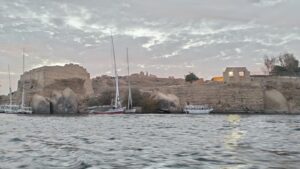
Elephantine Island sits gracefully in the middle of the Nile, directly opposite the city of Aswan in southern Egypt. Despite its relatively small size—about 1.5 km long and 500 meters wide—its importance is immense. Its strategic position made it:- Egypt’s southern gateway
- A border control point with Nubia
- A hub for trade and military operations
Why Is It Called Elephantine Island?
The name Elephantine Island is deeply rooted in its economic past. In ancient Egyptian times, the island was called “Abu”, meaning elephant. This wasn’t symbolic—it was practical. The island was a major center for the ivory trade, where elephant tusks from Africa passed into Egypt. Later, during the Greek period, the name evolved into Elephantine, derived from the Greek word for elephant or ivory. So the name Elephantine Island is more than a label—it is a reflection of its role as a gateway of wealth and trade. The island may have received its name after its shape, which in aerial views is similar to that of an elephant tusk, or from the rounded rocks along the banks resembling elephants. Known to the ancient Egyptians as “Elephant” , the island of Elephantine stood at the border between Egypt and Nubia.Elephantine Island Through the Ages
Early Dynastic Period (c. 3000 BCE) As you walk further inland, imagine soldiers guarding Egypt’s southern frontier. Elephantine Island was:- A military fortress
- An administrative center
- A checkpoint for expeditions
Old and Middle Kingdoms
The island grew into a powerful center of both religion and economy:- Granite from nearby quarries was transported through here
- The Nile’s flood was closely monitored
- Worship of Khnum flourished
New Kingdom
Now picture the island alive with rituals and movement. Temples expanded, priests performed ceremonies, and Elephantine Island became a vibrant religious hub.Ptolemaic and Roman Periods
Foreign rulers didn’t diminish its importance—they enhanced it. Temples were restored and redesigned, blending Egyptian traditions with Greek and Roman styles, preserving the sacred identity of Elephantine Island.Islamic and Modern Periods
Even after the fall of ancient civilizations, life continued. The island transformed into:- A residential and الزراعي area
- A cultural center for Nubian communities
- A bridge between ancient heritage and modern life
What Can You See on Elephantine Island?
Walking across Elephantine Island feels like exploring layers of history.Temple of Khnum
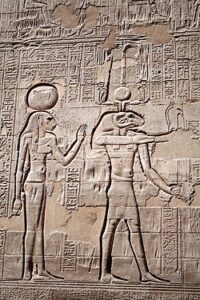
At the heart of the island lies the temple of Khnum. This temple dates from the Old Kingdom and continued through the Roman era. Khnum was believed to:- Control the Nile’s flow
- Shape humans on a potter’s wheel
Temple of Satet
One of the oldest temples in Egypt, dedicated to Satet. Satet was the goddess of:- The Nile’s flood
- Protection of Egypt’s southern borders
Temple of Anuket
The third part of the sacred triad honors Anuket. She symbolized:- Fertility
- The life-giving energy of the Nile
The Altar on Elephantine Island
The altar in the area of Elephantine Island is one of the lesser-known yet deeply significant archaeological elements compared to temples and tombs. Despite its simplicity, it carries profound religious meaning and offers insight into the ritual life of ancient Egypt.
What is the Altar?
An altar is a stone platform or simple structure used for presenting offerings to the gods. On Elephantine Island, these altars were often associated with local temples, especially those dedicated to Khnum, the creator god believed to shape humans from the clay of the Nile.
Location
The remains of these altars are typically found within or near religious complexes on the island, particularly around the Temple of Khnum. This area served as the spiritual and administrative heart of Elephantine.
Function in Rituals
Altars were used for:
- Offering food and drink to the gods
- Burning incense and aromatic substances
- Performing purification and sacred rituals
These offerings were not merely symbolic—they were believed to sustain the gods and maintain cosmic order, known as Ma’at.
What Makes Elephantine Altars Unique?
- Their relative simplicity compared to grand altars in major temples like Karnak
- Their connection to the daily life of the island’s inhabitants
- Evidence of influences from multiple periods (Pharaonic, Persian, and Greek)
Archaeological Significance
These altars reveal:
- The nature of local religious practices, not just official state rituals
- The island’s importance as a religious center in southern Egypt
- The continuity of worship despite changing rulers over time
Historical Context
Elephantine Island flourished from pre-dynastic times through the Greco-Roman period and served as Egypt’s southern gateway. Its altars reflect a blend of traditional Egyptian beliefs and external cultural influences.
The Nilometer
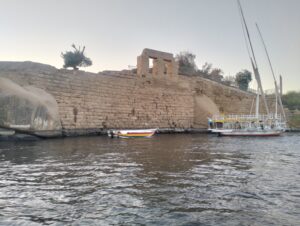
One of the most fascinating structures on Elephantine Island is the Nilometer. This ancient device measured the Nile’s water levels and determined:- Agricultural success
- Economic stability
- Tax levels
Aswan Museum
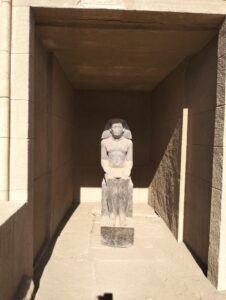
Located on the island, Aswan Museum offers a deeper look into discoveries made here. Inside, you’ll find:- Statues and inscriptions
- Tools and artifacts
- Objects from daily life across centuries
Annex of the Aswan Museum (Modern Section)
A newer extension has been added to the museum, enhancing its role as a center for archaeological discovery and interpretation.
What does this section include?
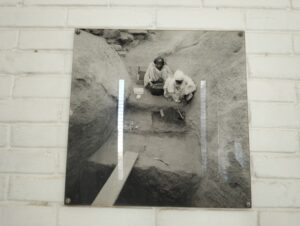
- Artifacts uncovered from ongoing excavations on Elephantine Island
- Discoveries made by the German Archaeological Mission working on the island
- Relatively recent finds that shed light on daily life, administration, and religion in ancient Aswan
One of the Oldest Marriage Contracts
Among the most fascinating objects displayed in the museum is one of the oldest known marriage contracts ever discovered in Egypt.
- This document dates back to the ancient Egyptian period (likely Middle or New Kingdom origins, with later parallels in Demotic texts)
- It outlines agreements between الزوج والزوجة، including:
- Financial rights
- Property arrangements
- Obligations of both partners
What makes it remarkable is that it shows how marriage in ancient Egypt was not only a social or religious bond, but also a legal and economic agreement—highlighting the advanced administrative and legal systems of the time.
Why This Section Matters
This modern annex is important because it:
- Connects past discoveries with ongoing archaeological work
- Provides a deeper understanding of Elephantine as a living, evolving settlement
- Showcases how new findings continue to reshape our knowledge of ancient Egyptian society
- Priests’ homes
- Administrative buildings
- Ancient streets
- Brightly colored houses
- Traditional crafts
- Unique cultural identity
- Tourism
- Agriculture (especially palm trees)
- Handicrafts
- Temple of Khnum complex
- Temple of Satet zone
- Ptolemaic and Roman ruins
- Nilometer area
- Aswan Museum sector
- German excavation sites
| Temple | Period |
| Temple of Satet | Early Dynastic → Ptolemaic |
| Temple of Khnum | Old Kingdom → Roman |
| Temple of Anuket | New Kingdom → Later |
| Additions | Ptolemaic & Roman |
- Ivory trade hub
- Military defense point
- Trade checkpoint
- Administrative capital of the south
How to Get to Elephantine Island
Getting to the island is simple and part of the adventure: By Local Boat (Felucca or Motorboat) Small boats depart regularly from the Aswan Corniche You can negotiate directly with local boatmen The ride takes about 5–10 minutes Or By public ferry There are two public ferries to the island. The northern ferry is next to KFC and the southern ferry is near Ferial Park. Tip: The best time to visit is early morning or around sunset for cooler weather and beautiful views.Tickets for Aswan Museum and the Temples.
Where to Buy Tickets Tickets are purchased at the entrance gate of the archaeological site on the island Or through the official government website to purchase tickets for museums and temples: https://egymonuments.com/ There is usually a single ticket that grants access to: Aswan Museum The open-air archaeological site Temples such as: Temple of Khnum Temple of Satet Nilometer Ticket Prices (Approximate) Egyptians: low-cost entry Foreign visitors: 200 Egyptian pounds Students (with ID): discounted tickets 📌 Note: Prices may change, so it’s always good to check locally. Opening Hours Typically from 8:00 AM to 5:00 PM Last entry is usually before closing time by about an hour Visitor Tips Wear comfortable shoes (the site involves walking on الرمال والحجارة) Bring water, especially in summer Combine your visit with nearby attractions like the Nubian villages A visit to Elephantine Island is not just about seeing ruins—it’s about walking through layers of history, from Pharaonic temples to living Nubian culture, all in one .Why Elephantine Island Is Unique
What makes Elephantine Island truly special?- It spans all major Egyptian historical eras
- It contains some of the oldest temples in Egypt
- It is still inhabited today
- It blends archaeology with living culture
The Soul of Elephantine Island
As the sun sets over the Nile, Elephantine Island glows in warm golden light. The past and present merge into one seamless moment. This is not just a destination. This is Elephantine Island—a place where history breathes, culture lives, and the Nile tells its eternal story.Unveil the treasures of Ancient Egypt’s kingdoms throuh time with
Atum Trip

Elephantine Island Location
Use the interactive map below to view Elephantine Island, Aswan, Egypt and open directions in Google Maps.