
Kom Ombo Temple
A Journey Through the Twin Sanctuary of Horus the Elder and Sobek
2026
Introduction: Stepping Into Kom Ombo Temple
The sun is slowly sinking behind the golden hills of Upper Egypt, and the Nile reflects its final glow like molten glass. You step off your boat, the soft earth beneath your feet carrying echoes of footsteps from thousands of years ago. Ahead of you rises the Kom Ombo Temple, silent yet alive, ancient yet eternal. As you walk closer, the symmetry of the structure begins to reveal itself—two entrances, two axes, two worlds intertwined into one sacred space. This is not just any temple. Kom Ombo Temple is a place where duality reigns, where two gods share one sanctuary, and where history whispers from every carved stone. This is your journey into Kom Ombo Temple—an immersive exploration of its location, history, architecture, deities, secrets, and the unseen stories that most visitors never truly notice.
Where You Stand:
The Sacred Geography of Kom Ombo Temple You are standing on the east bank of the Nile, about 50 kilometers north of Aswan, in a place once known as Nubt—the City of Gold. The river flows quietly beside the temple, but in ancient times, these waters held something far more powerful—crocodiles, sacred and feared, embodiments of the god Sobek.The location of Kom Ombo Temple was not chosen by chance. It was strategic, spiritual, and symbolic. The Nile here was both a giver of life and a force of destruction. And so, the temple was built to honor both protection and power—two sides of existence.
As you look around, imagine ancient priests watching the river, measuring its rise and fall, predicting the fate of crops, kingdoms, and people.
Walking Into History:
Who Built Kom Ombo Temple? As your hand brushes against the stone, you are touching history carved during the reign of Ptolemy VI Philometor, one of the rulers of the Greek Ptolemaic dynasty. Construction of Kom Ombo Temple began during his rule in the 2nd century BC.But the story does not end there.
Generations of rulers followed, adding their marks—kings, priests, and even Roman emperors. The temple became a living monument, evolving across centuries. Each carving you see is a voice from a different time, layered upon the last.
And yet, beneath it all, there are whispers of an even older temple—one from Egypt’s New Kingdom—long gone, but not forgotten.
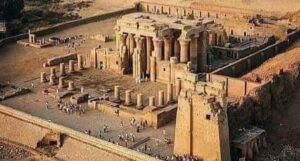
The Era of Fusion: A Temple Between Worlds
You are not just in ancient Egypt—you are in a time of transformation.
The Kom Ombo Temple belongs to the Graeco-Roman period, where Greek rulers adopted Egyptian traditions, and Egyptian gods were worshipped with new artistic styles.
Look closely at the carvings:
- The poses are Egyptian
- The proportions carry Greek influence
- The inscriptions merge two worlds
This is where cultures met—not in conflict, but in coexistence.
A Temple Between Worlds: The Graeco-Roman Era
As you move deeper into Kom Ombo Temple, you begin to notice something subtle but powerful.
This is Egyptian—but not entirely.
This is Greek—but not fully.
This temple was built during the Graeco-Roman period, a time when Egypt was under foreign rule—but its traditions refused to fade.
Instead, they adapted.
- Egyptian gods were still worshipped
- Hieroglyphs still covered the walls
- Rituals remained sacred
But artistic styles shifted.
Bodies became more natural. Proportions more fluid. Details more refined.
Kom Ombo Temple is not just a temple.
It is a conversation between civilizations.
The Two Gods of Kom Ombo Temple
Now, you reach the heart of the mystery.
Why is everything doubled?
Because Kom Ombo Temple is dedicated to two gods.
Not one.
Two.
As you pass through the entrance, you realize something unusual.Everything is doubled.
Because this temple belongs to two gods:
Horus the Elder (Haroeris): The Falcon of the Sky
Horus the Elder
Horus the Elder is not the child Horus you may know from the story of Isis and Osiris. This is an older, more ancient form—Haroeris, meaning “Horus the Great.”
He is:
- A sky god
- A symbol of kingship
- The protector of order (Ma’at)
As you stand before his side of Kom Ombo Temple, imagine the power he represented. Kings ruled in his name. Justice was believed to flow from his divine authority.
His falcon eyes were said to watch everything—nothing escaped him.
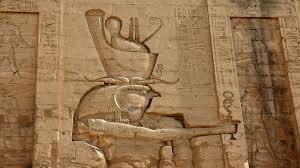
This is not the Horus of childhood myths.
This is Haroeris—Horus the Great.
An ancient form of the falcon god, older and more powerful in symbolism.
He represents:
- The sky itself
- Divine kingship
- Protection and justice
Imagine standing in his presence.
Above you, the vast sky. Below you, the land he protects.
His eyes—sharp, unblinking—symbolize awareness. Nothing escapes Horus.
Pharaohs ruled as his earthly embodiment. Justice was believed to flow from his divine will.
In Kom Ombo Temple, Horus represents order.
The structure.
The known.
Sobek: The Crocodile Lord of the Nile
Sobek
Now turn to the other side.
Sobek is raw power.
He is:
- The god of the Nile
- A symbol of fertility and creation
- A force of both chaos and protection
In ancient times, real crocodiles swam in the Nile beside this temple. They were not hunted—they were worshipped.
Priests fed them, adorned them, and even mummified them after death.
Sobek represents the unpredictable nature of life—the same river that gives can also take away.
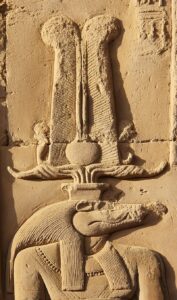
Then you turn—and everything changes.
Sobek is not calm.
Sobek is force.
He represents:
- The Nile’s fertility
- Raw strength
- Creation and chaos
But Sobek is not evil.
He is necessary.
The Nile could not be tamed—but it could be respected.
Ancient Egyptians believed Sobek controlled its waters. Appeasing him meant survival.
Live crocodiles once swam near this temple. They were adorned with jewels. Fed by priests. Worshipped as living gods.
And when they died?
They were mummified.
Preserved.
Eternal.
Sobek represents the unknown.
The unpredictable.
The power that cannot be controlled—only understood.
At the heart of the Kom Ombo Temple, Sobek stands as one of the most powerful and mysterious deities in ancient Egyptian religion. Worshipped as the god of the Nile, fertility, and raw natural القوة، Sobek was deeply connected to the environment surrounding the temple—especially the crocodile-filled waters of the Nile.
What makes Sobek even more fascinating at Kom Ombo Temple is his role within a divine family structure, often referred to as the Kom Ombo Triad.
Sobek (The Father)
Sobek is the central figure of this divine family.
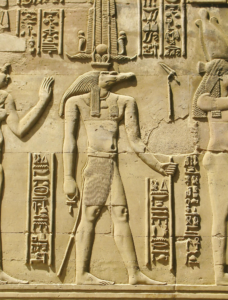
He is depicted as:
- A man with the head of a crocodile
- Wearing a crown with horns and a solar disk
His Role:
- God of the Nile and its life-giving floods
- Symbol of strength, protection, and fertility
- Guardian of the land and controller of water forces
At Kom Ombo Temple, Sobek represents the power of nature—unpredictable, dangerous, yet essential for life.
Ancient Egyptians both feared and revered him. Crocodiles were seen as living manifestations of Sobek, and many were raised, worshipped, and mummified in this very location.
The Father of Sobek (In Some Traditions)
- Ra
In certain ancient Egyptian beliefs, Sobek is considered a manifestation or son of Ra, the sun god. This connection gave Sobek a cosmic dimension, linking him not only to the Nile but also to the power of the sun and creation itself.
Sometimes, Sobek was even merged with Ra as: Sobek-Ra, symbolizing the unity of solar and earthly القوة.
The Mother of Sobek (In Other Traditions)
- Neith
In other traditions, Sobek is described as the son of Neith, one of the oldest and most powerful goddesses in Egypt.
Neith’s Role:
- Goddess of war and wisdom
- A primordial creator deity
- Protector of the universe
This relationship emphasizes Sobek’s role as a primordial force, born from one of the earliest divine powers in Egyptian mythology.
Hathor (The Wife of Sobek)
- Hathor
At Kom Ombo Temple, Sobek is often paired with Hathor as his consort.
Hathor represents:
- Love and joy
- Motherhood and femininity
- Music, beauty, and harmony
Symbolic Meaning:
The union between Sobek and Hathor reflects a powerful balance:
- Sobek = strength and raw force
- Hathor = gentleness and nurturing
Together, they represent the harmony between power and compassion, a central concept in ancient Egyptian belief.
Khonsu (The Son)
- Khonsu
Khonsu, the moon god, is sometimes considered the son of Sobek and Hathor in the Kom Ombo tradition.
He represents:
- The moon and time cycles
- Healing and protection
- Renewal and rebirth
His Role in the Triad:
Khonsu completes the divine family:
- Father (Sobek) → Power and creation
- Mother (Hathor) → Love and life
- Son (Khonsu) → Time and renewal
The Kom Ombo Triad Explained
At Kom Ombo Temple, this divine family forms a sacred triad:
- Sobek (Father – Power, Nile, Creation)
- Hathor (Mother – Love, Fertility, Harmony)
- Khonsu (Son – Moon, Time, Healing)
This structure reflects a common pattern in ancient Egyptian religion:
A father, mother, and child representing the cycle of life.
Important Note on Egyptian Mythology
Unlike modern religions, ancient Egyptian beliefs were not fixed or unified.
This means:
- Sobek’s parents could change depending on the region
- His family structure could vary across temples
- Different priests promoted different traditions
So while the Kom Ombo version presents this triad, other regions might describe Sobek differently.
In Kom Ombo Temple, Sobek is not just a crocodile god—he is part of a divine family that represents the balance of the universe.
- Born from powerful cosmic forces
- United with a goddess of love
- Father to a god of time
Sobek embodies the ancient Egyptian understanding of life itself:
Strength must be balanced with compassion
Creation must be guided by harmony
Power must exist alongside renewal
And as you stand within the walls of Kom Ombo Temple, surrounded by carvings of crocodiles, gods, and sacred symbols—you begin to realize:
Sobek is not just a myth.
He is the Nile.
He is life.
He is power.
The Symmetry of Kom Ombo Temple: Walking Through Two Worlds
As you walk deeper into Kom Ombo Temple, you begin to feel it. Everything is mirrored.- Two entrances
- Two hypostyle halls
- Two sanctuaries
- Order and chaos
- Sky and water
- Protection and power
Inside Kom Ombo Temple:
What You Discover
Now you begin to explore the inner chambers of Kom Ombo Temple.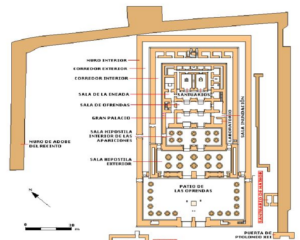
The Hypostyle Halls
Massive columns rise around you, covered in carvings of gods, kings, and rituals. The ceiling once painted in vivid colors now whispers in faded tones.
The Sanctuaries
Deep inside lie the sacred rooms where offerings were made. Only priests could enter here. You are standing where ancient rituals once connected humans with gods.
The Medical Carvings
On one wall, something unusual appears—carvings of surgical tools.Knives. Forceps. Instruments.
This is not myth. This is science.
Kom Ombo Temple holds one of the earliest known depictions of medical knowledge in human history.
The Nilometer
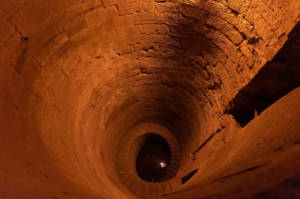
Nearby, a deep well descends into darkness. This is the Nilometer, used to measure the Nile’s water level.
The fate of entire harvests—and entire civilizations—depended on these measurements.
The Crocodile Museum
Just outside, you find mummified crocodiles.
Once living gods. Now silent witnesses.
Secrets Few People Know About Kom Ombo Temple
Even as you walk through Kom Ombo Temple, there are secrets hidden in plain sight.Hidden Passageways
Priests used secret corridors to create divine illusions—voices of gods echoing from unseen places.
Dual Priesthood
Two separate priesthoods likely served each god, operating independently within the same temple.
Lost Sections
Parts of the temple have been lost to Nile floods and earthquakes. What you see today is only a fragment of its original grandeur.
Astronomical Alignments
Some carvings suggest connections to stars and celestial events—linking the temple to the cosmos.
Visiting Kom Ombo Temple Today
As your journey continues, you realize that Kom Ombo Temple is not just ancient—it is alive with visitors from around the world.
How do I visit Kom Ombo Temple?
You can visit Kom Ombo Temple by stopping there while traveling from Aswan to Luxor by private car. Or you can visit it via Nile cruise, which also stops there.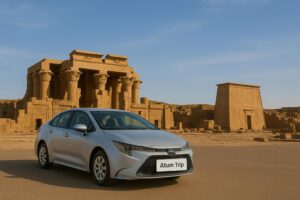
Opening Hours
- Daily: 7:00 AM – 9:00 PM
Ticket Prices
last update- Foreign visitors: 450 EGP
- Students: 225 EGP
Prices may change slightly depending on tourism regulations.
Why Kom Ombo Temple Still Matters
You step back and look at the temple one last time.
Why does Kom Ombo Temple still captivate us?
Because it is more than stone.
It is:
- A story of balance
- A meeting of cultures
- A fusion of religion and science
- A reminder that humanity has always searched for meaning
Conclusion:
Leaving Kom Ombo Temple
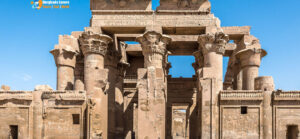
The temple is now illuminated, glowing in the night like a memory that refuses to fade.
As you walk away from Kom Ombo Temple, you realize something—
You did not just visit a place.
You experienced a world.
A world where gods walked beside humans.
Where crocodiles were sacred.
Where balance was everything.
And where, even now, the past is never truly gone.
For reservations and more information, contact us via WhatsApp or email.
Official Opening Hours and Ticket Prices
Kom Ombo Temple is currently listed by the Ministry of Tourism and Antiquities as open daily from 7:00 am to 9:00 pm. The combined area ticket, which includes Kom Ombo Temple and the Crocodile Museum, is listed at EGP 450 for foreign adults and EGP 225 for foreign students. Egyptian admission is listed at EGP 40 for adults and EGP 20 for students. The museum’s official visitor information states that its ticket window closes at 8:00 pm.
Hours and prices may be revised. Check the official Kom Ombo Temple page and the official Egypt monuments ticket portal before traveling.
What are the current Kom Ombo Temple opening hours and ticket prices?
The site is currently listed as open from 7:00 am to 9:00 pm daily. The combined foreign adult/student ticket for the temple and Crocodile Museum is listed at EGP 450/225. Confirm current information through the official links above.
Kom Ombo Temple Location
Use the interactive map below to view Kom Ombo Temple, Kom Ombo, Egypt and open directions in Google Maps.