Explore Qubbet el-Hawa / Dome of the Winds: A Rare Ancient Site Off the Beaten 2026

Qubbet el-Hawa / Dome of the Winds

The Hidden Tombs of Aswan You Shouldn’t Miss

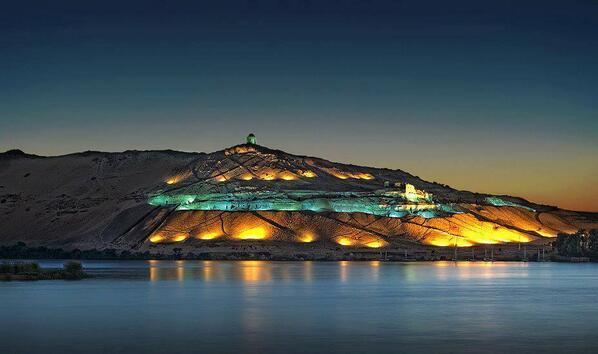
High above the golden west bank of the Nile in Aswan lies one of Egypt’s most underrated archaeological treasures—Qubbet el-Hawa / Dome of the Winds. While most travelers rush toward temples and monumental landmarks, this hillside necropolis quietly preserves thousands of years of human stories carved into stone.

If you’re searching for a destination that blends history, breathtaking views, and authentic discovery, then Qubbet el-Hawa / Dome of the Winds should be at the top of your list.

Where is Qubbet el-Hawa / Dome of the Winds Located?

Qubbet el-Hawa is located on the west bank of the Nile, directly opposite Aswan city and near Elephantine Island.

It sits atop a high sandstone hill, rising roughly 130 meters above the river, offering panoramic views of:

  • The Nile River
  • Lush islands
  • Desert landscapes
  • The skyline of Aswan

This strategic location was not random—it reflects ancient Egyptian beliefs about the afterlife, where the west symbolized the land of the dead.
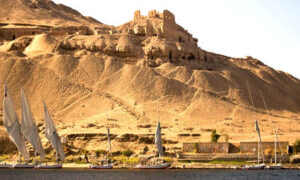
Qubbet el-Hawa  Dome of the Winds
Qubbet el-Hawa Dome of the Winds

Visual Experience of the Site

As you approach Qubbet el-Hawa / Dome of the Winds, the experience begins with a peaceful boat ride across the Nile. Once you reach the west bank, a long stone staircase leads you upward.

With every step:

  • The breeze becomes stronger (true to its name, Dome of the Winds)
  • The view becomes more dramatic
  • The silence deepens

At the top, small openings carved into the mountain reveal a hidden world—ancient tombs waiting to be explored.

Why is it Called Qubbet el-Hawa / Dome of the Winds?

The name has two origins:

  • “Qubbet” (Dome) refers to a small Islamic shrine at the summit dedicated to a local saint.
  • “El-Hawa” (The Winds) reflects the strong, constant breeze at the hilltop.

Thus, the English translation “Dome of the Winds” perfectly captures both its physical and cultural identity.

Interestingly, this name is relatively modern—the tombs themselves date back over 4,000 years.

What Does Qubbet el-Hawa Contain?

The site is a vast necropolis featuring more than 80 tombs carved directly into the rock, dating from:

  • The Old Kingdom
  • The Middle Kingdom
  • Later periods including the Roman era


Inside the Tombs

Each tomb typically includes:

  • A carved entrance
  • Pillared halls
  • Burial chambers
  • Walls covered with hieroglyphs and artwork

Unlike royal tombs, these belong to governors, officials, and nobles—giving us rare insight into everyday elite life in ancient Egypt.

Famous Tomb Owners

Harkhuf

Harkhuf
A governor and explorer known for expeditions deep into Africa. His tomb inscriptions describe trade missions and even mention bringing a “dancing dwarf” for the king.

Sabni

Sabni
Famous for avenging his father’s death in Nubia and retrieving his body—one of the most emotional and human stories ever recorded in Egyptian tombs.

Sarenput I & II

Sarenput I
Sarenput II
Their tombs are among the most artistically refined, featuring detailed carvings and elegant architectural layouts.

Stories Carved in Stone

What makes Qubbet el-Hawa / Dome of the Winds extraordinary is not just its age—but its stories.

A Story of Loyalty and Revenge

Sabni’s inscriptions tell how he:

  • Traveled south after his father was killed
  • Retrieved his body
  • Led a campaign of justice

This is not mythology—it is a real, personal narrative preserved for over 4,000 years.

Journeys to Africa

Harkhuf’s tomb reveals:

  • Trade expeditions into Nubia and middle of Africa
  • Diplomatic missions
  • Cultural exchange

These inscriptions prove that Aswan was once Egypt’s gateway to Africa.

 Daily Life Scenes

Inside the tombs, you’ll see depictions of:

  • Farming
  • Hunting
  • Religious rituals
  • Family life

These scenes provide a vivid picture of ancient Egyptian society beyond kings and pyramids.

What Makes Qubbet el-Hawa Special?

  1. Breathtaking Views

Few places in Egypt offer such a stunning panoramic view of the Nile.

  1. Authentic Experience

It’s less crowded than major tourist sites, allowing a peaceful and immersive visit.

  1. Human Stories

Unlike temples, these tombs focus on real people and their lives.

  1. Ongoing Discoveries

Archaeologists continue to uncover new tombs and artifacts here, making it a living historical site.

How to Visit Qubbet el-Hawa / Dome of the Winds

 (Access)

  • Take a felucca or motorboat from Aswan
  • Or reach it by car via the west bank

Climbing

  • Expect a 15–25 minute climb
  • Wear comfortable shoes
  • Bring water, especially in summer

 Opening Hours

  • 7:00 Am up to 5:00 Pm.

 Tickets

  • Affordable entry fees
  • Separate tickets may apply for specific tombs

 Archaeological Importance

Qubbet el-Hawa / Dome of the Winds is invaluable for historians because it offers:

  • Firsthand autobiographical inscriptions
  • Evidence of Egypt’s southern relations
  • Insight into non-royal elite society
  • Evolution of tomb architecture

It bridges the gap between royal history and everyday life.

 Why is Qubbet el-Hawa Not Well Known?

Despite its significance, it remains under the radar.

Reasons include:

  • Limited global promotion
  • Focus on famous sites like Luxor and Giza
  • Physically demanding access (the climb)
  • Lack of monumental structures visible from afar

Yet, this is exactly what makes it a hidden gem.

 A Journey Worth Taking

Visiting Qubbet el-Hawa / Dome of the Winds is not just about seeing tombs—it’s about experiencing history in its rawest form.

Standing at the top, with the wind around you and the Nile stretching below, you begin to understand why ancient Egyptians chose this place as their eternal resting ground.


Deeper Archaeological Insights into

Qubbet el-Hawa / Dome of the Winds

To fully understand the significance of Qubbet el-Hawa / Dome of the Winds, we need to go beyond its surface beauty and explore the deeper archaeological layers that make this site one of the richest yet most overlooked necropolises in Egypt.

️ The Origin of the Name Revisited

While the modern name Qubbet el-Hawa / Dome of the Winds comes from the Islamic dome of Sheikh Ali Abu el-Hawa at the summit, archaeologists interpret the name in a broader sense.

It refers not only to the visible dome but to the entire funerary landscape beneath it—a vast arrangement of tombs built on artificial terraces carved into the hillside overlooking the Nile.

This layered structure reflects centuries of continuous burial activity, making the site a multi-period historical archive rather than a single-era cemetery.

 Geological and Geographical Setting

The necropolis of Qubbet el-Hawa is located in West Aswan, just south of the Nubian village of Gharb Aswan.

At first glance, the site appears like a massive sand dune rising from the desert. However, beneath this sandy surface lies a huge formation of Nubian Sandstone, which provided the perfect material for carving tombs.

This natural formation became home to one of the most densely occupied cemeteries in ancient Egypt, with burials spanning from around 2500 BC through the Roman period.

 A Multi-Layered Necropolis

The central part of Qubbet el-Hawa / Dome of the Winds is composed of four distinct levels of rock-cut tombs, each reflecting different social classes and historical periods.

️ The Upper Level

Located just below the Islamic dome, this level contains a small number of relatively simple tombs.

 The Middle Terraces

Further down, the quality of the rock improves, allowing for large, elaborate tombs built by high-ranking officials and governors—particularly those connected to Elephantine Island.

These individuals gained wealth and power through:

  • Trade with Nubia
  • Military expeditions
  • Administrative control of Egypt’s southern frontier

 The Lower Necropolis

Below the main terraces lies a vast, long-overlooked burial zone extending toward the ancient floodplain of the Nile.

Social Stratification in Ancient Aswan

During the Old and Middle Kingdoms, burial locations clearly reflected social hierarchy:

  • Lower classes were buried on Elephantine Island
  • Administrative elites occupied the lower necropolis of Qubbet el-Hawa
  • The highest-ranking officials were buried on the upper terraces

This spatial organization offers rare physical evidence of social stratification in ancient Egyptian society, especially in the strategically important First Cataract region.

History of Exploration and Excavation

Although parts of the site were known earlier, modern archaeological interest began in the late 19th century.

  • During the French campaign in Egypt and Syria, early explorers documented features like the causeway leading to Tomb QH 34h.
  • In 1885, British General Francis Grenfell conducted one of the first formal explorations.
  • Around 15 years later, Lady Cecil began systematic excavations.

Throughout the 20th century:

  • Labib Habachi focused on key tombs (1946–1952)
  • Elmar Edel expanded research (1959–1984)

By 2008, archaeologists had identified 209 tombs, though large parts of the site remained unexplored.

 Modern Discoveries and Research

A major breakthrough came in 2016 with the Qubbet el-Hawa Research Project (QHRP), led by international teams including:

  • University of Birmingham
  • Egypt Exploration Society
  • Later joined by Macquarie University

Key Discoveries:

  • Identification of a second terrace of tombs
  • Discovery of monumental structures supported by retaining walls
  • Excavation of a lower cemetery (Site C)

By 2019, researchers uncovered:

  • Nine mastaba tomb superstructures
  • A grid-like road system connecting burial complexes
  • Evidence of continuous use from the Old Kingdom to the Middle Kingdom

Recent Archaeological Finds

In January 2020, the QHRP team led by Martin Bommas discovered:

  • Six mastaba tombs
  • Two shaft graves
  • One rock-cut tomb with multiple burials

Some tombs were remarkably well preserved, with dimensions reaching up to 352 × 635 cm.

Interestingly, one tomb had:

  • A sealed mudbrick entrance
  • Evidence of ancient looting through a rear wall

This highlights a timeless reality: even in antiquity, tomb robbers were active.

Number and Types of Tombs

As of July 2022, around 100 tombs have been fully documented and studied in detail, though the total number is higher.

Most date back to the Old Kingdom, providing valuable insights into burial traditions in Upper Egypt’s First Nome.

 Notable Figures Buried at Qubbet el-Hawa

Beyond the well-known figures already mentioned, the site includes tombs of:

  • Mekhu and Sabni – known for their dramatic father-son story
  • Sobekhotep – a royal seal-bearer
  • Heqaib – later venerated as a local god
  • Ishemai

Later burials include:

  • Setka (a chanting priest from the First Intermediate Period)
  • Kakm (a New Kingdom high priest)
  • User Wadjat (a ruler of Elephantine)
  • Amenhotep (a high priest and royal official)

Even kings such as Senusret I and Senusret II are associated with the site.

What the Inscriptions Reveal

According to Egyptian Ministry of Tourism and Antiquities, the inscriptions inside the tombs highlight:

  • Trade expeditions to foreign lands
  • Military campaigns
  • Administrative responsibilities
  • Religious practices

One of the most important roles documented is that of expedition leaders, such as Harkhuf, who were sent to distant regions to acquire rare goods for the royal court.

 Religious Importance

During the Middle Kingdom, a sanctuary dedicated to figures like Heqaib emerged near Elephantine Island.

These individuals were not just officials—they became locally revered figures, blurring the line between history and religious worship.

 Ongoing Development and Future Access

In July 2022, officials from the Aswan and Nubian Antiquities Sector announced plans to:

  • Restore and prepare more tombs for public access
  • Improve roads leading to the site
  • Install signage and visitor guidance systems
  • Introduce modern lighting

These efforts aim to transform Qubbet el-Hawa / Dome of the Winds into a more accessible and engaging destination without compromising its authenticity.

 Final Insight

What makes Qubbet el-Hawa / Dome of the Winds truly exceptional is its depth—both physically and historically.

It is not just a collection of tombs, but a layered narrative of:

  • Power and politics
  • Trade and exploration
  • Family, loyalty, and memory

Every terrace you descend…
Every inscription you read…
Reveals another chapter of a story that has been unfolding for over 4,000 years.

Contact us to discover more secrets that many people overlook in Aswan.

Philae TempleAbu Simbel Temple – The Unfinished Obelisk – Kalabsha Temple – Elephantine Island – Nubian Village – Edfu TempleKom Ombo Temple – Khnum Temple
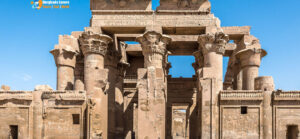
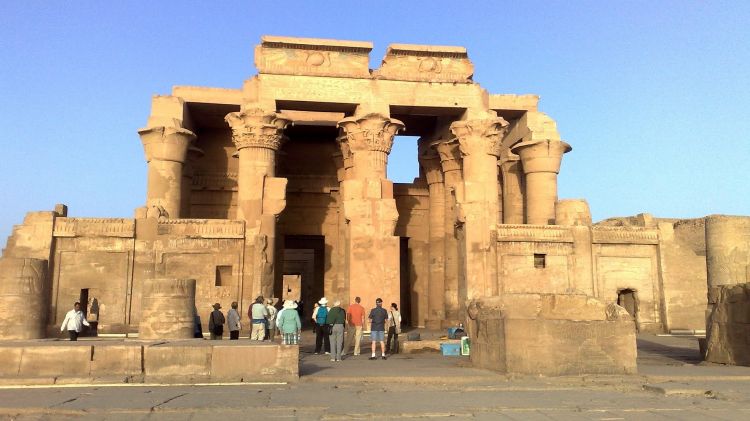
Kom Ombo Temple

The unique Kom Ombo Temple – Horus and Sobek

Kom Ombo Temple

A Journey Through the Twin Sanctuary of Horus the Elder and Sobek

2026

Introduction: Stepping Into Kom Ombo Temple

The sun is slowly sinking behind the golden hills of Upper Egypt, and the Nile reflects its final glow like molten glass. You step off your boat, the soft earth beneath your feet carrying echoes of footsteps from thousands of years ago. Ahead of you rises the Kom Ombo Temple, silent yet alive, ancient yet eternal.

As you walk closer, the symmetry of the structure begins to reveal itself—two entrances, two axes, two worlds intertwined into one sacred space. This is not just any temple. Kom Ombo Temple is a place where duality reigns, where two gods share one sanctuary, and where history whispers from every carved stone.

This is your journey into Kom Ombo Temple—an immersive exploration of its location, history, architecture, deities, secrets, and the unseen stories that most visitors never truly notice.

Kom ombo 2

Where You Stand:

The Sacred Geography of Kom Ombo Temple

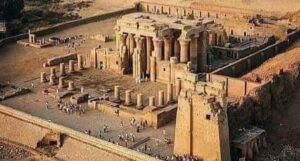
You are standing on the east bank of the Nile, about 50 kilometers north of Aswan, in a place once known as Nubt—the City of Gold. The river flows quietly beside the temple, but in ancient times, these waters held something far more powerful—crocodiles, sacred and feared, embodiments of the god Sobek.


The location of Kom Ombo Temple was not chosen by chance. It was strategic, spiritual, and symbolic. The Nile here was both a giver of life and a force of destruction. And so, the temple was built to honor both protection and power—two sides of existence.

As you look around, imagine ancient priests watching the river, measuring its rise and fall, predicting the fate of crops, kingdoms, and people.

Walking Into History:

Who Built Kom Ombo Temple?

As your hand brushes against the stone, you are touching history carved during the reign of Ptolemy VI Philometor, one of the rulers of the Greek Ptolemaic dynasty. Construction of Kom Ombo Temple began during his rule in the 2nd century BC.

But the story does not end there.

Generations of rulers followed, adding their marks—kings, priests, and even Roman emperors. The temple became a living monument, evolving across centuries. Each carving you see is a voice from a different time, layered upon the last.

And yet, beneath it all, there are whispers of an even older temple—one from Egypt’s New Kingdom—long gone, but not forgotten.

kom ombo 3

The Era of Fusion: A Temple Between Worlds

You are not just in ancient Egypt—you are in a time of transformation.

The Kom Ombo Temple belongs to the Graeco-Roman period, where Greek rulers adopted Egyptian traditions, and Egyptian gods were worshipped with new artistic styles.

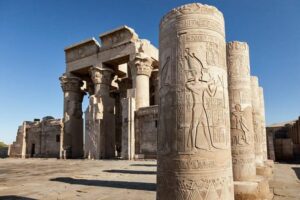
Look closely at the carvings:

  • The poses are Egyptian
  • The proportions carry Greek influence
  • The inscriptions merge two worlds

This is where cultures met—not in conflict, but in coexistence.

A Temple Between Worlds: The Graeco-Roman Era

As you move deeper into Kom Ombo Temple, you begin to notice something subtle but powerful.

This is Egyptian—but not entirely.

This is Greek—but not fully.

This temple was built during the Graeco-Roman period, a time when Egypt was under foreign rule—but its traditions refused to fade.

Instead, they adapted.

  • Egyptian gods were still worshipped
  • Hieroglyphs still covered the walls
  • Rituals remained sacred

But artistic styles shifted.

Bodies became more natural. Proportions more fluid. Details more refined.

Kom Ombo Temple is not just a temple.

It is a conversation between civilizations.

The Two Gods of Kom Ombo Temple

Now, you reach the heart of the mystery.

Why is everything doubled?

Because Kom Ombo Temple is dedicated to two gods.

Not one.

Two.

As you pass through the entrance, you realize something unusual.

Everything is doubled.

Because this temple belongs to two gods:

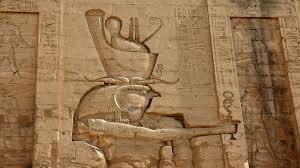
Horus the Elder (Haroeris): The Falcon of the Sky

Horus the Elder

Horus the Elder is not the child Horus you may know from the story of Isis and Osiris. This is an older, more ancient form—Haroeris, meaning “Horus the Great.”

He is:

  • A sky god
  • A symbol of kingship
  • The protector of order (Ma’at)

As you stand before his side of Kom Ombo Temple, imagine the power he represented. Kings ruled in his name. Justice was believed to flow from his divine authority.

His falcon eyes were said to watch everything—nothing escaped him.

Horus

This is not the Horus of childhood myths.

This is Haroeris—Horus the Great.

An ancient form of the falcon god, older and more powerful in symbolism.

He represents:

  • The sky itself
  • Divine kingship
  • Protection and justice

Imagine standing in his presence.

Above you, the vast sky. Below you, the land he protects.

His eyes—sharp, unblinking—symbolize awareness. Nothing escapes Horus.

Pharaohs ruled as his earthly embodiment. Justice was believed to flow from his divine will.

In Kom Ombo Temple, Horus represents order.

The structure.

The known.

Sobek: The Crocodile Lord of the Nile

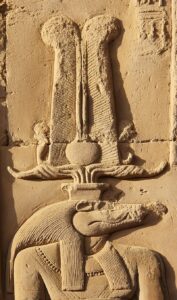
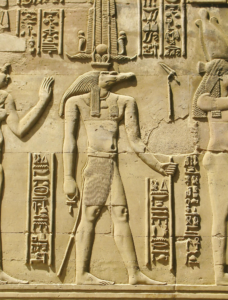
Sobek

Now turn to the other side.

Sobek is raw power.

He is:

  • The god of the Nile
  • A symbol of fertility and creation
  • A force of both chaos and protection

In ancient times, real crocodiles swam in the Nile beside this temple. They were not hunted—they were worshipped.

Priests fed them, adorned them, and even mummified them after death.

Sobek represents the unpredictable nature of life—the same river that gives can also take away.

Sobek

Then you turn—and everything changes.

Sobek is not calm.

Sobek is force.

He represents:

  • The Nile’s fertility
  • Raw strength
  • Creation and chaos

But Sobek is not evil.

He is necessary.

The Nile could not be tamed—but it could be respected.

Ancient Egyptians believed Sobek controlled its waters. Appeasing him meant survival.

Live crocodiles once swam near this temple. They were adorned with jewels. Fed by priests. Worshipped as living gods.

And when they died?

They were mummified.

Preserved.

Eternal.

Sobek represents the unknown.

The unpredictable.

The power that cannot be controlled—only understood.

At the heart of the Kom Ombo Temple, Sobek stands as one of the most powerful and mysterious deities in ancient Egyptian religion. Worshipped as the god of the Nile, fertility, and raw natural القوة، Sobek was deeply connected to the environment surrounding the temple—especially the crocodile-filled waters of the Nile.

What makes Sobek even more fascinating at Kom Ombo Temple is his role within a divine family structure, often referred to as the Kom Ombo Triad.


Sobek (The Father)

Sobek is the central figure of this divine family.

He is depicted as:

  • A man with the head of a crocodile
  • Wearing a crown with horns and a solar disk

Sobek

His Role:

  • God of the Nile and its life-giving floods
  • Symbol of strength, protection, and fertility
  • Guardian of the land and controller of water forces

At Kom Ombo Temple, Sobek represents the power of nature—unpredictable, dangerous, yet essential for life.

Ancient Egyptians both feared and revered him. Crocodiles were seen as living manifestations of Sobek, and many were raised, worshipped, and mummified in this very location.


The Father of Sobek (In Some Traditions)

  • Ra

In certain ancient Egyptian beliefs, Sobek is considered a manifestation or son of Ra, the sun god. This connection gave Sobek a cosmic dimension, linking him not only to the Nile but also to the power of the sun and creation itself.

Sometimes, Sobek was even merged with Ra as:
Sobek-Ra, symbolizing the unity of solar and earthly القوة.


 The Mother of Sobek (In Other Traditions)

  • Neith

In other traditions, Sobek is described as the son of Neith, one of the oldest and most powerful goddesses in Egypt.

Neith’s Role:

  • Goddess of war and wisdom
  • A primordial creator deity
  • Protector of the universe

This relationship emphasizes Sobek’s role as a primordial force, born from one of the earliest divine powers in Egyptian mythology.


Hathor (The Wife of Sobek)

  • Hathor

At Kom Ombo Temple, Sobek is often paired with Hathor as his consort.

Hathor represents:

  • Love and joy
  • Motherhood and femininity
  • Music, beauty, and harmony

Symbolic Meaning:

The union between Sobek and Hathor reflects a powerful balance:

  • Sobek = strength and raw force
  • Hathor = gentleness and nurturing

Together, they represent the harmony between power and compassion, a central concept in ancient Egyptian belief.


 Khonsu (The Son)

  • Khonsu

Khonsu, the moon god, is sometimes considered the son of Sobek and Hathor in the Kom Ombo tradition.

He represents:

  • The moon and time cycles
  • Healing and protection
  • Renewal and rebirth

His Role in the Triad:

Khonsu completes the divine family:

  • Father (Sobek) → Power and creation
  • Mother (Hathor) → Love and life
  • Son (Khonsu) → Time and renewal

The Kom Ombo Triad Explained

At Kom Ombo Temple, this divine family forms a sacred triad:

  • Sobek (Father – Power, Nile, Creation)
  • Hathor (Mother – Love, Fertility, Harmony)
  • Khonsu (Son – Moon, Time, Healing)

This structure reflects a common pattern in ancient Egyptian religion:
 A father, mother, and child representing the cycle of life.


 Important Note on Egyptian Mythology

Unlike modern religions, ancient Egyptian beliefs were not fixed or unified.

This means:

  • Sobek’s parents could change depending on the region
  • His family structure could vary across temples
  • Different priests promoted different traditions

So while the Kom Ombo version presents this triad, other regions might describe Sobek differently.


In Kom Ombo Temple, Sobek is not just a crocodile god—he is part of a divine family that represents the balance of the universe.

  • Born from powerful cosmic forces
  • United with a goddess of love
  • Father to a god of time

Sobek embodies the ancient Egyptian understanding of life itself:
Strength must be balanced with compassion
Creation must be guided by harmony
Power must exist alongside renewal

And as you stand within the walls of Kom Ombo Temple, surrounded by carvings of crocodiles, gods, and sacred symbols—you begin to realize:

Sobek is not just a myth.

He is the Nile.

He is life.

He is power.

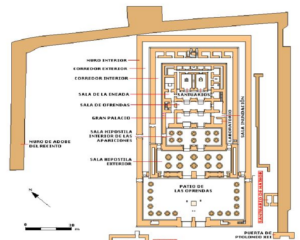
The Symmetry of Kom Ombo Temple: Walking Through Two Worlds

As you walk deeper into Kom Ombo Temple, you begin to feel it.

Everything is mirrored.

  • Two entrances
  • Two hypostyle halls
  • Two sanctuaries

It is as if you are walking through two temples at once.

One for Horus. One for Sobek.

And yet, they exist in perfect balance.

This symmetry is not just architectural—it is philosophical. It represents duality:

  • Order and chaos
  • Sky and water
  • Protection and power

Ancient Egyptians understood something profound: balance is the foundation of existence.

Inside Kom Ombo Temple:

What You Discover

Now you begin to explore the inner chambers of Kom Ombo Temple.

kom ombo 4

The Hypostyle Halls

Massive columns rise around you, covered in carvings of gods, kings, and rituals. The ceiling once painted in vivid colors now whispers in faded tones.

The Sanctuaries

Deep inside lie the sacred rooms where offerings were made. Only priests could enter here. You are standing where ancient rituals once connected humans with gods.

The Medical Carvings

On one wall, something unusual appears—carvings of surgical tools.

Knives. Forceps. Instruments.

This is not myth. This is science.

Kom Ombo Temple holds one of the earliest known depictions of medical knowledge in human history.

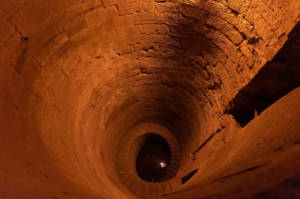
The Nilometer

Nilometer Kom ombo

Nearby, a deep well descends into darkness. This is the Nilometer, used to measure the Nile’s water level.

The fate of entire harvests—and entire civilizations—depended on these measurements.

The Crocodile Museum

Just outside, you find mummified crocodiles.

Once living gods. Now silent witnesses.

Secrets Few People Know About Kom Ombo Temple

Even as you walk through Kom Ombo Temple, there are secrets hidden in plain sight.

Hidden Passageways

Priests used secret corridors to create divine illusions—voices of gods echoing from unseen places.

Dual Priesthood

Two separate priesthoods likely served each god, operating independently within the same temple.

Lost Sections

Parts of the temple have been lost to Nile floods and earthquakes. What you see today is only a fragment of its original grandeur.

Astronomical Alignments

Some carvings suggest connections to stars and celestial events—linking the temple to the cosmos.

Visiting Kom Ombo Temple Today

As your journey continues, you realize that Kom Ombo Temple is not just ancient—it is alive with visitors from around the world.

How do I visit Kom Ombo Temple?

You can visit Kom Ombo Temple by stopping there while traveling from Aswan to Luxor by private car.

Or you can visit it via Nile cruise, which also stops there.

Aswan to Luxor

Opening Hours

  • Daily: 7:00 AM – 9:00 PM

Ticket Prices

last update

  • Foreign visitors: 450 EGP
  • Students: 225 EGP

You can book tickets online through the Egyptian government website.

Prices may change slightly depending on tourism regulations.

Why Kom Ombo Temple Still Matters

You step back and look at the temple one last time.

Why does Kom Ombo Temple still captivate us?

Because it is more than stone.

It is:

  • A story of balance
  • A meeting of cultures
  • A fusion of religion and science
  • A reminder that humanity has always searched for meaning

Conclusion:

Leaving Kom Ombo Temple

The unique Kom Ombo Temple - Horus and SobekThe sun has set.

The temple is now illuminated, glowing in the night like a memory that refuses to fade.

As you walk away from Kom Ombo Temple, you realize something—

You did not just visit a place.

You experienced a world.

A world where gods walked beside humans.

Where crocodiles were sacred.

Where balance was everything.

And where, even now, the past is never truly gone.

For reservations and more information, contact us via WhatsApp or email.

Atum Trip


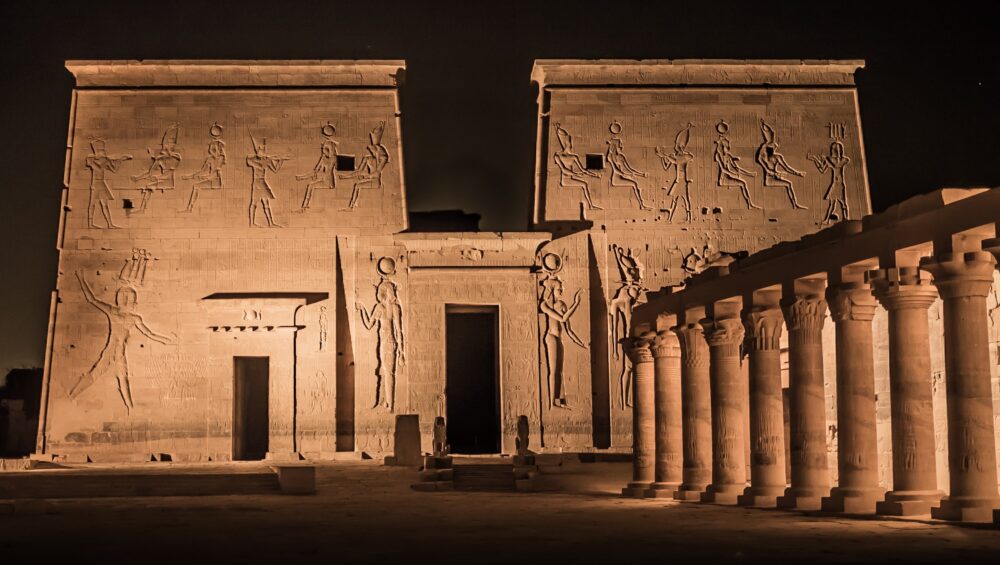
philae temple

Philae Temple

Philae Temple

ISIS & OSIRIS


A Complete Guide

1.  Why is it Called the “Philae Temple”?

The name “philae temple ” (Greek: Φιλαί, Arabic: فيلا) comes from the ancient Egyptian term “P-aaleq” (𓊪𓄿𓃭𓅱𓊖), meaning “the end” or “remote place.” This refers to its location near the southern frontier of Egypt. The Greeks later adapted it to “philae temple.”

Some scholars also link the name to the Coptic word “Pilak”, meaning “corner,” as the temple was situated on an island at the edge of Egypt’s dominion.

  1. Location of the Philae Temple

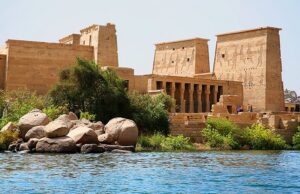
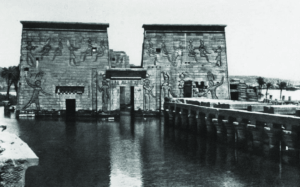
Originally, the temple stood on Philae Island in the Nile near Aswan. However, due to the construction of the Aswan Low Dam (1902) and High Dam (1960s), the temple was submerged underwater for most of the year.

To save it, UNESCO led a massive relocation project (1972–1980), moving the temple block-by-block to Agilkia Island, about 500 meters away. Today, visitors access it by boat from Aswan.

  1. When Was the Philae Temple Built?

  • Earliest construction: Begun by Pharaoh Nectanebo I (380–362 BCE)of the 30th Dynasty (Late Period).
  • Major expansions: Carried out by the Ptolemies (Greek rulers, 332–30 BCE)and Roman Emperors (Augustus & Tiberius, 1st century CE).
  • Latest additions: Some inscriptions date to Emperor Diocletian (3rd–4th century CE).

Unlike most Egyptian temples built by pharaohs, philae temple was largely developed under foreign rulers who revered Egyptian gods.


  1. What Does the Temple Contain Inside?

The philae temple Temple Complex includes several structures:

The Temple of Isis (Main Temple)

  • First Pylon: Massive gateway with reliefs of Ptolemy XII smiting enemies.
  • Birth House (Mammisi): Depicts the divine birth of Horus, son of Isis and Osiris.
  • Inner Sanctuary: Once held the sacred golden statue of Isis(now lost).
  • Nilometer: Used to measure the Nile’s water levels for flood predictions.

The Kiosk of Trajan (Pharaoh’s Bed)

  • A beautiful, unfinished Roman pavilion with 14 columns, built by Emperor Trajan.

Temple of Hathor

  • Features musical reliefsof Bes (dwarf god of dance) and musicians.

Temple of Horus (Harendotes)

  • Dedicated to Isis’ son, Horus, in his form as “Horus the Avenger.”

Christian Influence

  • After Christianity spread, parts were converted into a church (6th century CE). Crosses and Coptic graffiti can still be seen.
  1. Why Was the Philae Temple Destroyed?

  • Natural Causes: Flooding from the Aswan Low Dam (1902)submerged Philae for months each year, eroding its reliefs.
  • Religious Conflict: Early Christians defaced some pagan carvings.
  • Salvage Operation: The High Dam (1960s)threatened to drown it permanently, prompting UNESCO to relocate it.


  1. Why Do Tourists Visit Philae Temple?

  • Last Active Pagan Temple: One of the final places where ancient Egyptian religion was practiced(until 537 CE).
  • Sound & Light Show: A famous nighttime spectacle narrating Isis’ legends.
  • Architectural Beauty: Blends Egyptian, Greek, and Roman styles.
  • Mythological Significance: Linked to Isis, Osiris, and Horus—central to Egyptian mythology.


  1. Philae Temple Opening Hours & Tickets

  • Opening Hours: 7:00 AM – 4:00 PM (Winter), 7:00 AM – 5:00 PM (Summer).
  • Sound & Light Show: Evening sessions (multiple languages).
  • Ticket Cost: ~500 EGP(foreign tourists), discounts for students.


10 Lesser-Known Facts About Philae Temple

  • The last hieroglyphic inscription(394 CE) and demotic text (452 CE) in history were found here.
  • Napoleon’s troopsdrew the first modern sketches of Philae in 1799.
  • Isis worshipcontinued here 200 years after Rome became Christian.
  • The temple was a pilgrimage sitefor Nubians, Greeks, and Romans.
  • Cleopatra VIImay have visited Philae.
  • The sacred Isis statuewas smuggled to Rome before Christianity banned her cult.
  • Agilkia Island, where it now stands, was reshaped to mimic original Philae.
  • The temple’s axisaligns with the Nile’s flow, unlike most Egyptian temples.
  • A hidden chamberbeneath the sanctuary may have held Osiris’ relics.

Philae was considered a burial place of Osiris (Abaton Island nearby was believed to hold his body).

The Goddess Isis: Myths & Facts in Egyptology

Who Is Isis?

  • Goddess of Magic, Motherhood, and Healing
  • Wife of Osiris, mother of Horus
  • Symbols: Throne headdress, ankh, tyet (knot of Isis)

Key Myths

  1. Resurrection of Osiris: Isis reassembled Osiris after his murder by Set, creating the first mummy.
  2. Protector of Horus: Hid Horus in the Delta marshes to save him from Set.
  3. The Secret Name of Ra: Tricked Ra into revealing his true name to gain divine power.

Cult & Worship

  • Spread to Rome: Temples built as far as London (Londinium).
  • Linked to Virgin Mary: Early Christians merged her imagery with Mary.
  • Last Pagan Stronghold: Philae was her most sacred site.

Isis: The Divine Mother of Egypt.

Her Relationships with Osiris, Horus, and Anubis

Isis (Egyptian: Aset or Auset, 𓊨𓏏𓆇𓁐) was one of the most important goddesses in ancient Egyptian religion. She was worshipped as the ideal mother, wife, and magician, embodying love, healing, and resurrection.

Her relationships with Osiris, Horus, and Anubis form the core of one of Egypt’s most enduring myths—the Osiris Cycle—which explains life, death, and kingship.

1.      Isis and Osiris: The Sacred Marriage

Roles:

    • Isis: Goddess of magic, fertility, and protection.
    • Osiris: God of the afterlife, resurrection, and agriculture.

The Myth:

    • Osiris was the first divine king of Egypt, ruling wisely with Isis as his queen.
    • His jealous brother Set (Seth)murdered him by tricking him into a coffin, which was thrown into the Nile.
    • Isis searched tirelesslyfor Osiris’ body, finding it in Byblos (Lebanon).
    • Using her magical powers, she briefly revived Osiris and conceived their son, Horus.
    • After Osiris’ second death, she helped Anubismummify him, making Osiris the first mummy and ruler of the Duat (underworld).

Symbolism:

    • Their love symbolized eternal devotion and resurrection.
    • Osiris’ resurrection was linked to the Nile’s flooding and crop cycles.

2.      Isis and Horus: The Protective Mother

Roles:

    • Horus: Sky god, divine avenger, and rightful heir to Osiris’ throne.

The Myth:

    • After Osiris’ death, Isis hid Horus in the Delta marshes(Chemmis) to protect him from Set.
    • She used magic spellsto heal him when he was stung by scorpions (a story told in the Metternich Stela).
    • When Horus grew up, she supported his battle against Setto reclaim his father’s throne.

Symbolism:

    • Isis’ protection of Horus made her the archetype of motherhood(similar to the Virgin Mary in Christianity).
    • The Horus-Set conflictrepresented the struggle between order (Ma’at) and chaos (Isfet).

3.      Isis and Anubis: The Secret Son?

Roles:

    • Anubis: God of mummification and guardian of the dead.

The Myth (Lesser-Known Version):

    • In some late traditions, Anubis was secretly the son of Osiris and Nephthys(Isis’ sister).
    • Nephthys, disguised as Isis, seduced Osiris, and when Set discovered this, she abandoned the baby.
    • Isis found and raised Anubis, making him her adopted son and ally in mummifying Osiris.

Symbolism:

    • Anubis’ role in Osiris’ resurrection reinforced Isis’ power over death and rebirth.
    • Their bond showed her compassion, as she accepted Anubis despite his origins.

Conclusion: The Divine Family’s Legacy

  • Isis & Osiris→ Represent love, death, and resurrection.
  • Isis & Horus→ Symbolize motherly protection and royal succession.
  • Isis & Anubis→ Highlight her mercy and mastery over funerary rites.

This myth cycle was so influential that Isis worship spread to Greece and Rome, where she was called “Isis Myrionymos” (Goddess of a Thousand Names).


contact us to explore the beauty of ancient Egyptian civilization. 

Atum Trip will provide you with more plans and options for your visits.


Abu Simbel temple

Abu Simbel Temples: Complete Guide, History (2026)

Abu Simbel Temples: A Monument of Eternal Majesty (2026 Guide)

As you step through the vast sands of southern Egypt and the shimmering edge of Lake Nasser comes into view, the monument begins to rise from the ground like a revelation. From afar, you first notice four colossal statues seated solemnly at the façade—each one an image of Ramses II, measuring over 20 meters (66 feet) high. Their sheer size is overwhelming.

Each statue wears the double crown of Upper and Lower Egypt, symbolizing his dominion over the entire land. Even time itself has bowed to these statues—despite the damage to one of them (destroyed by an ancient earthquake), its head lies reverently at its base, still guarding the temple.

Beneath these statues runs a row of baboon carvings, arms raised in praise to the rising sun—a nod to the solar deity Ra-Horakhty. Above the entrance is a bas-relief of Ra-Horakhty himself, seated in a shrine with a falcon head, crowned with the sun disk, holding the ankh (life) and scepter of power.

Now you walk toward the entrance, under the shadow of these giants. You are about to step inside a mountain carved with divine intention.

Stepping into the Hypostyle Hall

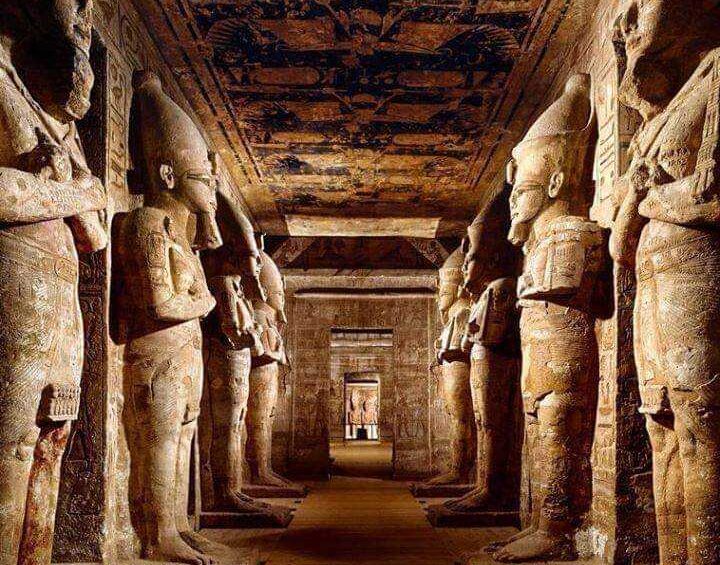
As you cross the threshold, the outside world fades. You’re now standing in the Great Hypostyle Hall, a vast chamber about 18 meters deep and 16 meters wide. It’s dim, cool, and hushed. The air is thick with history.

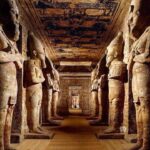
You immediately face eight colossal Osirid pillars, each carved as a mummified figure of Ramses II, arms crossed over his chest, holding the crook and flail—the emblems of kingship. These statues line both sides of the hall in two rows, four on each side, and rise about 10 meters tall.

Their presence is not merely structural but deeply symbolic. Ramses appears as Osiris, the god of the afterlife, declaring his divine connection and eternal life.

As you walk deeper between these massive pillars, you see that the walls of the hall are alive with scenes.

Reliefs on the Right Wall: The Battle of Kadesh

On the right side, the temple becomes a war chronicle.

Here, in intricate detail, the famous Battle of Kadesh unfolds before your eyes. Chariots race. Horses rear. Ramses II stands at the center, larger than life, pulling back his bow with precision, his muscles tensed.

This battle, fought against the Hittites around 1274 BCE, was one of the largest chariot battles in history. Though it ended in a stalemate, Ramses declared it a triumph. Here, it is presented not as history but as divine conquest.

You see the enemies fleeing in disarray, while Ramses charges into their midst with the confidence of a god-king. His inscriptions boast:
“I alone defeated millions of enemies!”

Left Wall: Religious Rituals and Offerings

Turning to the left wall, you are immersed in a quieter, more spiritual world.

Here Ramses is shown making offerings to various gods:

  • Pouring wine before Ra-Horakhty
  • Burning incense for Amun-Ra
  • Kneeling in prayer before Ptah, the god of craftsmen

These scenes reflect the temple’s dual function—as both a monument of power and a place of worship. Ramses is not only a warrior but also a pious intermediary between his people and the divine.

Look closely and you’ll notice the symbols:

  • The ankh, the sign of life
  • The was scepter, power
  • The djed pillar, stability

Everything is intentional—every relief a prayer in stone.


The Small Vestibule (Second Hall)

You proceed deeper into the temple. The Hypostyle Hall gives way to a second, smaller hall, supported by four square pillars. This space is quieter, more intimate. The decoration here emphasizes Ramses’s role in the divine order.

One scene shows him standing beside the sacred barques—portable shrines for the gods—used in religious processions. Another shows him performing the ritual of the Sed Festival, a ceremonial renewal of kingship celebrated after 30 years of rule.

Ramses, here, is no longer just a mortal leader—he is transforming into a god among gods.

Entering the Sanctuary

At last, you arrive at the Holy of Holies—the sanctuary, the most sacred room of the temple.

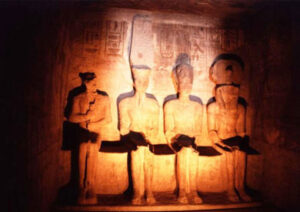
The room is small and dark, about 3 meters wide and 7 meters deep. At the far end are four enthroned statues, carved directly into the back wall:

  1. Ra-Horakhty – the rising sun, falcon-headed, god of light and justice
  2. Ramses II – seated as a god beside the gods
  3. Amun-Ra – the hidden one, king of the gods
  4. Ptah – the god of creation, shrouded in darkness

Twice a year—on February 22 and October 22—the first rays of the morning sun enter this sanctuary and strike the faces of the first three statues. Only Ptah remains in shadow, eternally associated with the underworld.

Standing in this room feels like standing inside an ancient calendar, a cosmic observatory aligned with celestial perfection. You realize this is more than a temple—it is a sun temple, a solar machine engineered for eternity.

The Ceiling and Hidden Details

Look up—the ceilings of the halls are covered in vibrant, though faded, star patterns and representations of the vulture goddess Nekhbet, spreading her protective wings.

In corners and along side chambers, you may find niches, likely used for ritual storage or offerings. There are also graffiti left by early explorers, including Greek and Roman visitors, who stood where you now stand and left their names behind.

Side Rooms and Storage Chambers

Flanking the halls are smaller side rooms—six in total. Scholars believe these were used to house:

  • Ritual tools
  • Statues of gods
  • Sacred texts or scrolls
  • Offerings made by priests or pilgrims

Each room has its own carvings, though less elaborate, and echoes with mystery.

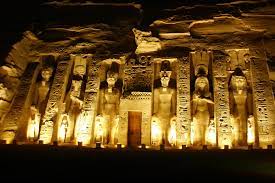
The Small Temple of Nefertari: A Brief Step Aside

A short distance away stands the Temple of Hathor and Nefertari. Its façade features six standing statues—four of Ramses and two of his queen, Nefertari. What makes this unique is that Nefertari is carved the same height as Ramses, a rare honor in ancient Egypt.

Inside:

  • Columns adorned with images of Hathor-cows and musical instruments
  • Reliefs of Nefertari playing the sistrum, an instrument sacred to Hathor
  • Intimate, artistic scenes emphasizing fertility, beauty, and love

It is not just a royal monument—it is a celebration of divine femininity.

Abu Simbel 3

The Abu Simbel Temples are among the most breathtaking monuments of ancient Egypt, standing proudly in the golden sands of southern Egypt near Lake Nasser. These iconic temples are not just architectural masterpieces—they are a timeless story carved in stone, reflecting power, faith, and scientific brilliance.

In this complete guide, we explore everything about the Abu Simbel Temples—from their location and history to their incredible solar phenomenon and why they are a must-visit destination.


Where Are the Abu Simbel Temples Located?

The Abu Simbel Temples are located in southern Egypt, about 230 km southwest of Aswan, near the Sudanese border.

Originally carved into a sandstone cliff on the west bank of the Nile, the temples were relocated in the 1960s to higher ground near Lake Nasser after the construction of the Aswan High Dam.

Today, their dramatic setting—surrounded by desert and water—adds to their legendary beauty.


Why Are They Called Abu Simbel Temples?

Interestingly, the name Abu Simbel is not ancient Egyptian.

It dates back to the 19th century when Swiss explorer Johann Ludwig Burckhardt discovered the site with the help of a local Nubian boy named Abu Simbel. Later, Italian explorer Giovanni Belzoni officially explored the temples in 1817 and kept the name in honor of the boy.


Who Built the Abu Simbel Temples?

The Abu Simbel Temples were built by Pharaoh Ramses II, one of the most powerful rulers in ancient Egypt.

The temples are dedicated to:

  • Ramses II himself (as a divine ruler)

  • Gods:

    • Ra-Horakhty

    • Amun-Ra

    • Ptah

Next to the Great Temple is the Small Temple, dedicated to:

  • Queen Nefertari

  • Goddess Hathor

This makes Abu Simbel unique, as it honors both divine kingship and royal love.


What Is Inside the Abu Simbel Temples?

The Great Temple

  • Four colossal statues of Ramses II (20 meters tall)

  • A massive hypostyle hall with Osirid pillars

  • Detailed wall carvings of battles like the Battle of Kadesh

  • Religious scenes and offerings

At the sanctuary:

  • Statues of Ramses II, Amun-Ra, Ra-Horakhty, and Ptah


The Small Temple

  • Six statues on the façade (including Queen Nefertari)

  • Unique equality in statue size between king and queen

  • Interior scenes of music, worship, and devotion to Hathor


Why Are the Abu Simbel Temples So Famous?

The Abu Simbel Temples are famous for several reasons:

  • Massive scale reflecting ancient Egyptian power

  • Precise solar alignment (astronomical genius)

  • Artistic perfection in carvings and design

  • Unique dedication to both a king and his queen

  • UNESCO relocation project, one of the greatest rescue operations in history


The Sun Festival: A Unique Astronomical Phenomenon

One of the most incredible features of the Abu Simbel Temples is the solar alignment phenomenon.

Twice a year:

  • February 22

  • October 22

The sun penetrates the temple and illuminates:

  • Ramses II

  • Amun-Ra

  • Ra-Horakhty

While Ptah remains in darkness, symbolizing the underworld.

This phenomenon highlights the advanced astronomical knowledge of ancient Egyptians.


The Relocation of the Abu Simbel Temples

In the 1960s, the construction of the Aswan High Dam threatened to submerge the temples.

Between 1964 and 1968:

  • The temples were cut into over 1,000 blocks

  • Each block weighed up to 30 tons

  • They were moved 65 meters higher and 200 meters back

This massive project, led by UNESCO, is considered one of the greatest engineering achievements in history.


Who Was Ramses II?

Ramses II, also known as Ramses the Great, ruled Egypt from 1279 to 1213 BCE.

He was known for:

  • Military leadership (Battle of Kadesh)

  • Massive construction projects

  • Diplomatic achievements (first peace treaty in history)

He ruled for 66 years and had over 100 children, leaving behind a powerful legacy.


Is Visiting Abu Simbel Temples Worth It?

Absolutely. The Abu Simbel Temples are one of the top tourist attractions in Egypt.

Highlights:

  • Giant statues up close

  • Ancient hieroglyphics

  • The Sun Festival experience

  • Unique desert landscape

Visiting Abu Simbel is not just a trip—it’s a journey through history.


Conclusion

The Abu Simbel Temples are more than just monuments—they are a symbol of human brilliance, artistic mastery, and eternal legacy.

From their colossal statues and sacred alignment with the sun to their dramatic rescue from flooding, they continue to inspire millions of visitors every year.

If you are passionate about history, culture, or architecture, the Abu Simbel Temples should be at the top of your travel list.

For more information, please contact us.

Who is Atum according to the ancient Egyptians?

Atum

Who is Atum according to the ancient Egyptians?

Atum: The Creator God of Ancient Egypt

Who is Atum?

In ancient Egyptian mythology, Atum is known as the self-created god and the origin of all existence. His name is often interpreted as “the Complete One,” reflecting the belief that he embodied everything before creation began.

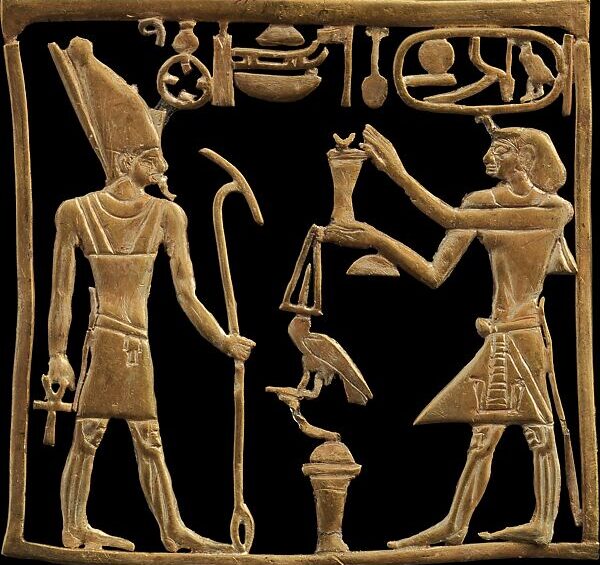
According to Egyptian belief, he emerged from the primordial waters known as Nun and stood upon the first mound (benben), marking the beginning of creation. From this moment, the universe started to take shape.

He then brought forth the first divine pair—Shu (air) and Tefnut (moisture)—establishing the foundation of the cosmos.

Atum
Atum

The Creation of the Universe

The creation story begins with the emergence of the first elements of life. From Shu and Tefnut came:

  • Geb (earth)
  • Nut (sky)

From them, the well-known gods were born:

  • Osiris
  • Isis
  • Seth
  • Nephthys

This divine structure forms what is known as the Heliopolitan Ennead, one of the most important theological systems in ancient Egypt.

Connection with the Sun

This deity is closely linked to the sun, particularly its setting phase. In Egyptian belief, the sun has three forms:

  • Khepri (sunrise – creation)
  • Ra (midday – power)
  • Atum (sunset – completion)

This daily cycle reflects the concept of continuous creation and completion.

Historical Presence

Evidence of this god appears in the Pyramid Texts of the Old Kingdom (around the 24th century BCE), making him one of the earliest recorded deities in Egyptian history.

His importance continued across multiple eras, including the Middle Kingdom, New Kingdom, and later periods, showing his lasting influence in Egyptian religion.

Is Atum the Same as Adam?

No, they are completely different.

This ancient Egyptian deity belongs to a completely different religious and cultural system than Adam, who is a central figure in Abrahamic religions such as Islam, Christianity, and Judaism.

  • A creator god responsible for the origin of the universe
  • A human figure considered the first man

The similarity in names is purely coincidental.

Places of Worship

The main center of worship was Heliopolis (ancient Iunu), located near modern Cairo. It was one of the most important religious centers in ancient Egypt.

Other associated locations include:

  • Per-Atum in the Nile Delta
  • Memphis and Saqqara
  • Theban temples such as Karnak and Luxor

He was also frequently mentioned in inscriptions across various temples, even when not the primary deity.

The Divine Family

The creator god is considered the origin of the Heliopolitan Ennead:

  1. Atum
  2. Shu and Tefnut
  3. Geb and Nut
  4. Osiris, Isis, Seth, and Nephthys

This structure represents how the ancient Egyptians understood the formation of the universe.

Symbols and Representation

He is associated with several powerful symbols:

  • The setting sun
  • The double crown of Egypt
  • Human form as a king
  • Serpent form (symbol of cycles)
  • The benben stone
  • Was scepter and ankh

What Did He Represent?

This deity represents fundamental concepts in Egyptian belief:

  • Creation and origin
  • Completeness and unity
  • Cosmic balance (Ma’at)
  • The cycle of life and renewal

He symbolizes the idea that everything begins from a single source and eventually returns to it.

Relationship with Other Gods

With Khnum

While this creator brings existence into being, Khnum is believed to shape humans physically on a potter’s wheel. Together, they represent different aspects of creation.

With Osiris

One represents creation, while Osiris represents death and rebirth. This relationship reflects the full cycle of existence in Egyptian belief.

Conclusion

Atum remains one of the most important figures in ancient Egyptian religion, representing both the beginning and the completion of existence.

Through this concept, the ancient Egyptians expressed a deep understanding of the universe as a continuous cycle of creation, balance, and renewal.

Contact us to explore the beauty of ancient Egyptian civilization.

Atum Trip will provide you with the best travel plans and experiences.

Philae Temple